I think many people would agree that the Schlumpf hub is a revolutionary advancement in unicycling technology and a total game changer. I couldn’t be more excited to (hopefully) soon have a unicycle with this incredibly unique geared hub in my stable of one-wheeled vehicles. Realizing that not everyone has the skillset to build a wheel with a Schumpf hub themselves, and in an effort to make Schlumpf geared unicycles available to as many people as possible, I am hoping that this thread will be a directory and resource for unicyclists who would like to hire an experienced Schlumpf wheel/guni builder to help them make owning such an amazing vehicle more feasible. I hope it will also be a resource for Schlumpf owners who may need some assistance troubleshooting, repairing, or tuning the Schlump guni that they already own. While some bike shops may be able to build a wheel with a Schumpf hub, hiring a person who already has experience doing so may be a more desirable option for some people. As far as I know, Florian is the only one in the world currently manufacturing production guni hubs. I hope this thread will help facilitate driving the highest possible demand for Schumpf hubs so that the community of guni riders will increase and so that Florian will stay highly motivated to keep producing his hubs long into the future. As such, if you have experience building Schlumpf wheels and maintaining them and you are available for hire to help others build, troubleshoot, repair or tune their Schlumpf guni, please reply to this thread with the following information:
Your location (Country, State or Province, City or Town)
What services you are willing to offer (building the wheel, troubleshooting, repairing, tuning, or all of the above)
Your level of experience and/or confidence level in performing such work.
As far as compensation, that can be worked out privately between you and whoever solicits your services. Given that Schlumpf wheel builders have very specialized knowledge and expertise, I think this thread could be quite helpful for prospective guni owners who feel overwhelmed with the prospect of building, troubleshooting or repairing this type of unicycle on their own.
While I think it would be great to have a directory of people who know how to service a Schlumpf hub (i.e. completely disassemble and reassemble it) I’d like to point out two things.
One, doing a wheel build using a Schlumpf hub is no different from any other wheel build (other than having the knuckle of the spoke on the countersunk side).
Two, “tuning” as you call it is quite simple. Just loosen the buttons until there is a bit of play and then tighten the set screw. The manual is your best friend.
Thanks for your post. That’s very interesting information. I was under the impression that a wheel build with a Schlumpf hub was far more complicated than other wheels and that tuning the hub was a challenging endeavor. Apparently, I was mistaken. It looks like this thread isn’t necessary.
In any case, you’re right, this really is a revolutionary hub for all unicycle activities that go from point A to point B.
I hope these hubs will be produced for as long as possible.
The construction of the wheel presents no difficulty, but if you have a problem with an internal bearing, the shifting shaft or any other part of the mechanism, it’s almost impossible to repair on your own. As far as I know, you either have to send the hub back to the manufacturer in Switzerland, or send it to Flansberrium in Canada.
Based on the feedback provided, if possible, perhaps the title of this thread should be changed to “Worldwide Directory of People who can Service Schlumpf Hubs”.
I agree, except for adjusting the knobs as described above there‘s no real difference between building a wheel with a Schlumpf and a regular hub.
One thing to remember, though, is that not all frames will take a Schlumpf without some machining / filing.
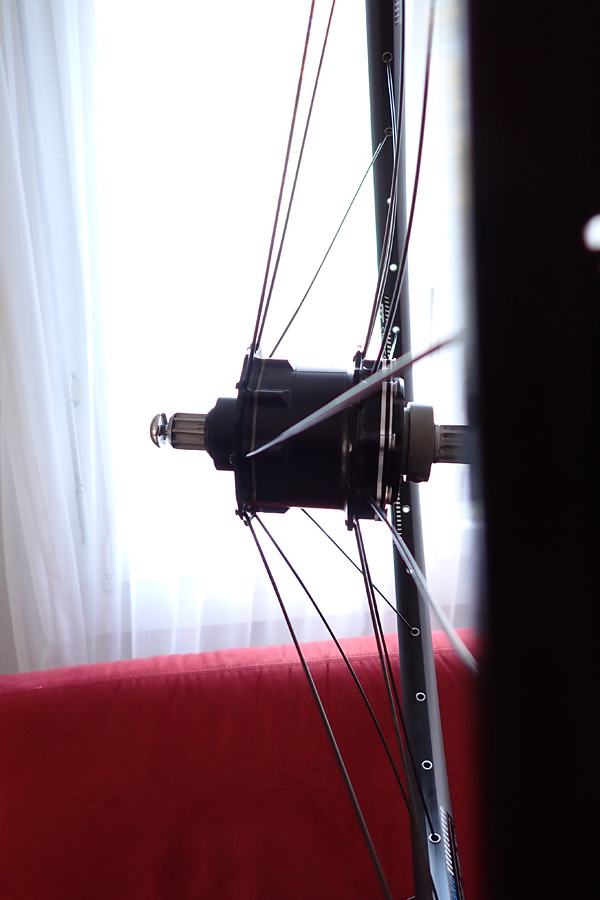
And the 2022 Schlumpf has a very thick flange. While building my geared wheel that led to the hub temporarily being shifted sideways as long as the spokes weren‘t tensioned. I wasn’t sure if I should proceed with the build or if I needed spokes with a longer bend section. After pondering a couple days I decided to proceed, and everything went just fine. But when you build a wheel with a Schlumpf hub, be prepared for this particularity.
On the subject of servicing, I think it would be awesome to share that knowledge with the wider community. Obviously servicing your own hub would void the warranty. I wouldn’t encourage anyone to potentially damage their hub in an an attempt to service/fix it.
But having that info would be an invaluable resource to give owners the confidence to know what is going on inside their hub. Or to take their hub to a bike shop for the technician to have that info at hand and/or taking on the liability of servicing it themselves.
Quality bike hubs use forged aluminum flanges, which is stronger than the machined aluminum Schlumpf uses. That’s probably why the flanges are wider; there have been cases of spoke tension breaking the flange.
I think the flange design was changed after reports of the flanges failing.
What I find interesting is that the left and right flanges aren‘t identical in thickness.
Oh, and I found a picture that shows what I meant when I wrote:
Hm, looking at the picture again, I think I should’ve switched the spokes of the disc side (on the right, in this picture), so that the heads point to the outside… Then again, that would mean that the J-bends wouldn’t be properly supported by the countersunk holes… Oh well, the wheel behaves fine, so far.
You’re always going to have half of your spokes facing the other direction. Normally holes are countersunk on both sides.
I’d have expected those spokes on the right side to be trailing spokes, installed from the outside, same as on the left.
Late to the party, I see. Thanks Andy for starting this thread. If there are any Schlumpf nerds listening, I’m trying to repair the threads on my shifting rods. Not the button, but the rod it threads onto. Long story short, the threads on one side got jammed up (f$*#ed up) due to riding with a loose crank bolt. Couldn’t get the buttons off without doing some damage. About 3/5 mm of threads on the affected side are toast; basically gone. I’ve made two attempts to find a die to repair the threads. First attempt; the guys at my local Ace Hardware misidentified the diameter; that special order, when it finally arrived, is no good. They thought it was an M4, which was too big. Looks more like 3mm. My new die threads onto the “good” side for several turns, then stops. I don’t want to go any further without confirming I have the correct size and thread pitch. Does anyone know what that’s supposed to be?
I think you should specify the model of your hub. I just checked on a knob of a model 15, and it screwed onto a standard M4 bolt, no problem. That would be M4x0.7. The bolt was 30mm long and the knob could be screwed all the way to the head, not just a couple of revolutions.
My hub is from 2010 (I don’t know the number offhand but i think it’s been documented in that thread that lists all the voluntarily reported hubs to their owners (at that time). I have confirmed that the shifting rods on that hub and my circa-2022 hub are M4.0.7. It took a few tries to nail this down; my local Ace Hardware special ordered me a die, after determining it was M4, but the die I got was a 3mm size Today I got some help from Home Depot, and from ChatGPT on how to go about the delicate process of repairing those threads. I have a wingnut of the correct dimensions. I’m going to cut a slot across it, to create a thread-cleaning tool. Fingers crossed…
If the M4 die you got is split (on one side) and you have a die stock/holder to put it in, you can screw in the centre screw on the stock to open the die up a bit so it doesn’t cut so deep (that forces the die open a bit). That might be better for cleaning up the threads.
 Today I got some help from Home Depot, and from ChatGPT on how to go about the delicate process of repairing those threads. I have a wingnut of the correct dimensions. I’m going to cut a slot across it, to create a thread-cleaning tool. Fingers crossed…