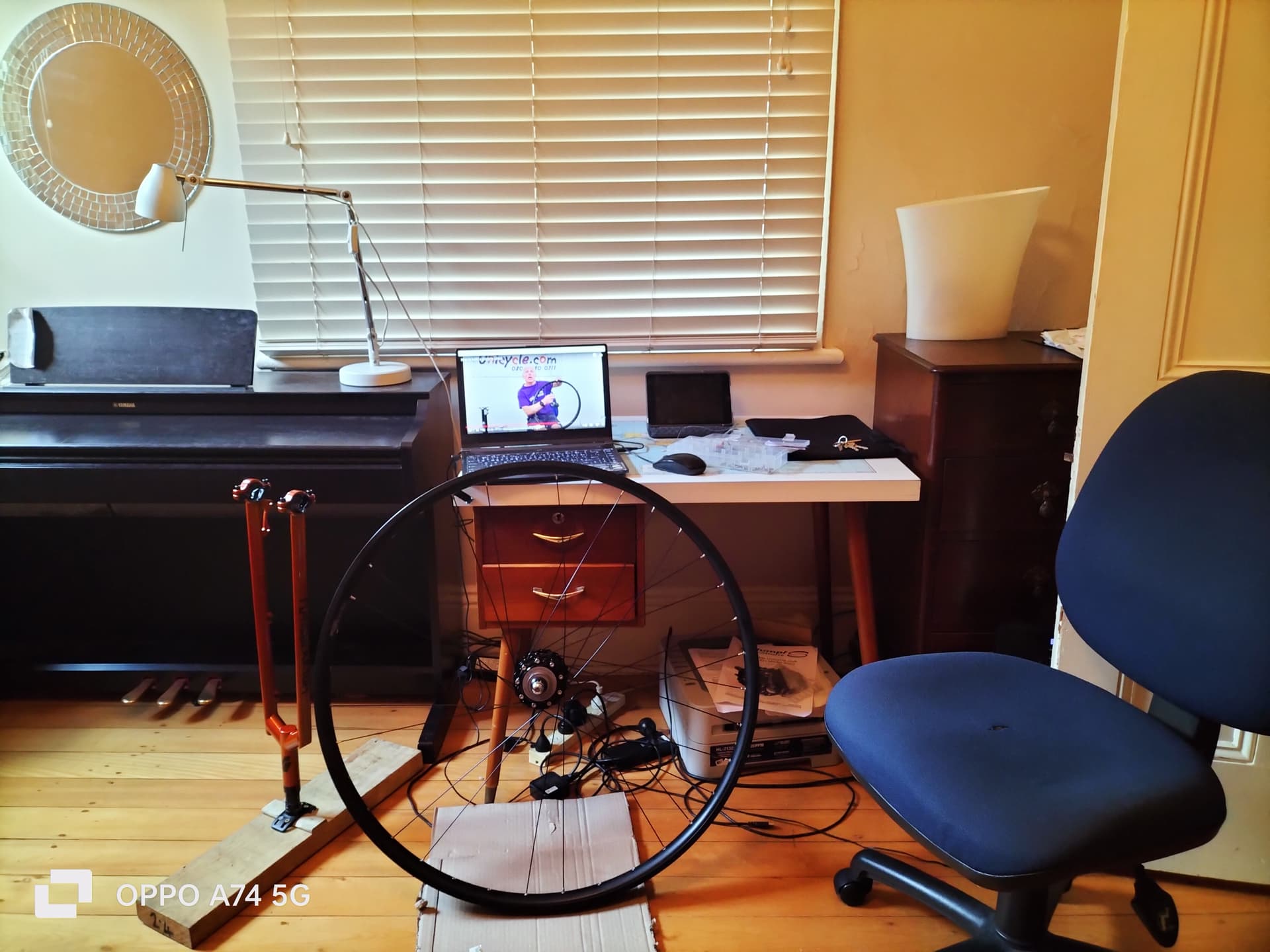
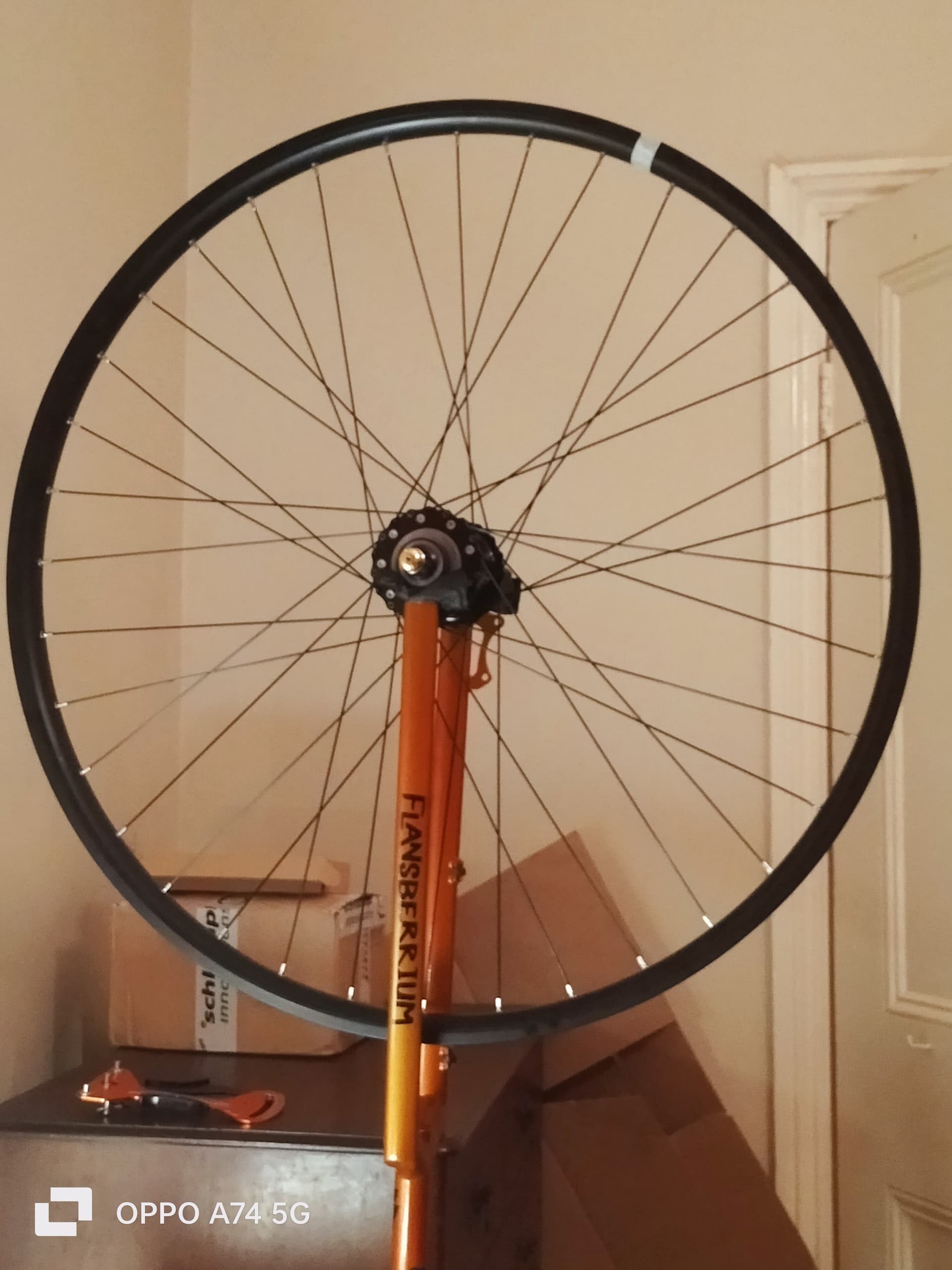
Hi @Unicyc - I got my brass washers from that WA online spoke supplier, and they seemed OK (like the pic from @mindbalance ). Regarding where they are needed - NOT on the disc rotor flange which is way too thick, in fact I had gotten 36 brand new spokes of the correct lengths, but found that the disc side “head in” spokes would be very stressed when bent in towards the center line of the rim as the J-bend part was short (yes, spoke specs can vary in many ways, and bicycles normally have thinner flanges), so I had some old unicycle spokes re-cut and threaded, because they had a slightly bigger J-bend dimension, better suited to the thick flange (so now some of my spokes are black, as I used a mix of spokes - the originally newly purchased spokes were better suited to the “head out” situation). The angles would be different on your bigger wheel, but it would be worth double checking early in the lacing. I guess considerations like the size of the J-bend could influence whether washers are used as well.
I decided to use just one layer of Schlumpf rotor spacers, I maybe could have got away with no spacers, but the spacer layer meant the caliper pad adjustment was pretty much in the middle of its movement in the slot. I used the original 12mm Torx screws to install the rotor, with red Loctite.
My brake system seemed to have lost some oil during frame storage, so I syringed in some new mineral oil and replaced the pads (resin pads).
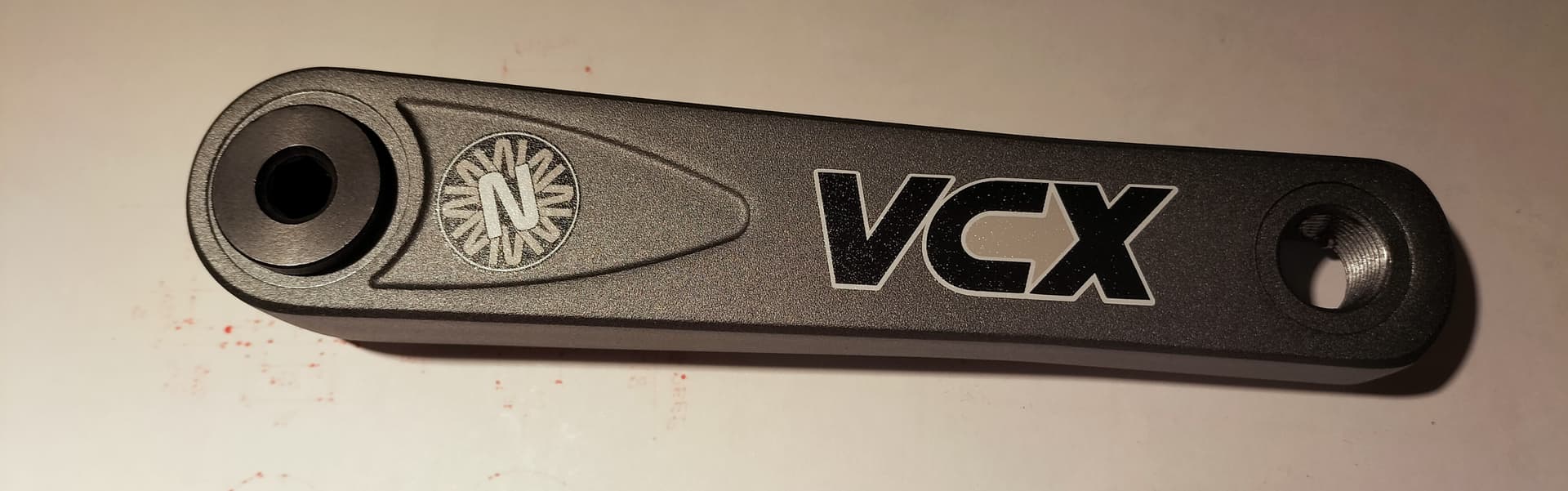
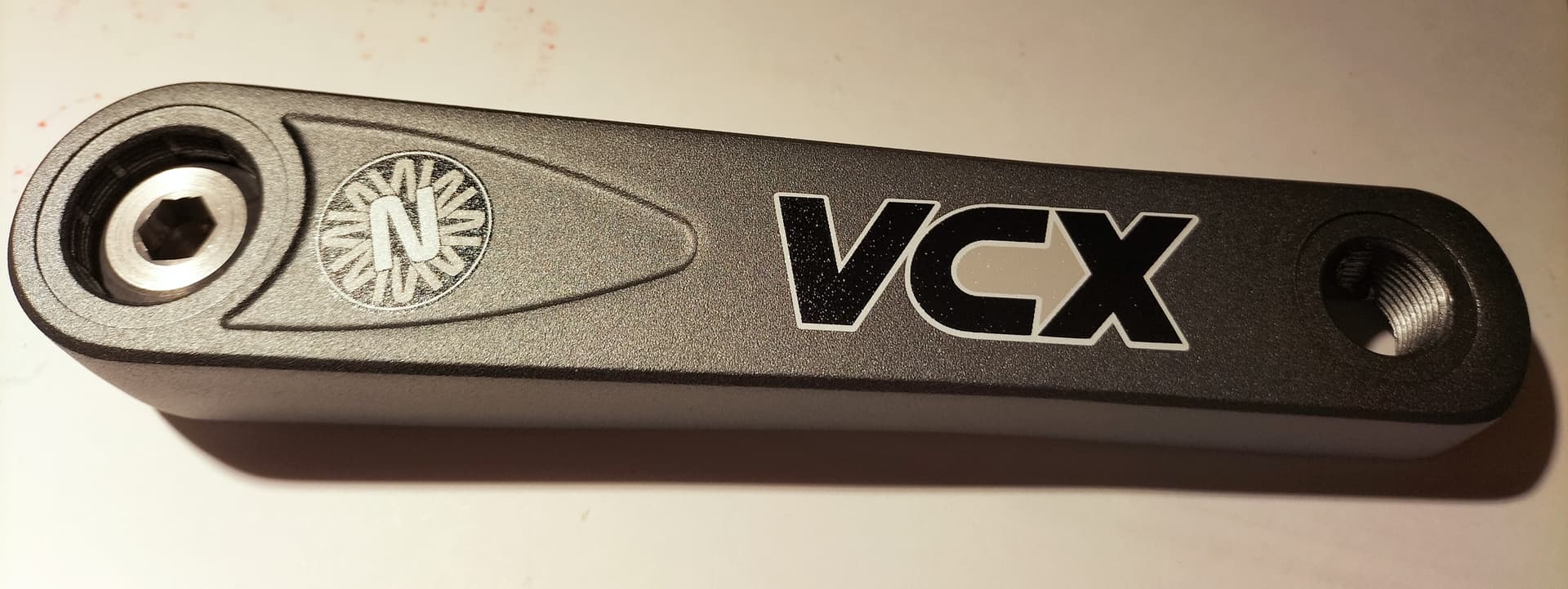
I had no issue with the “head in” spokes on the non-disc side hitting the frame, although there was not a lot of clearance. (btw my build is a 125 hub, 26in rim, and frame from what was once a nimbus 32 unicycle, using nimbus VCX 150 cranks with plastic nimbus pedals having the plastic pins filed down a bit).
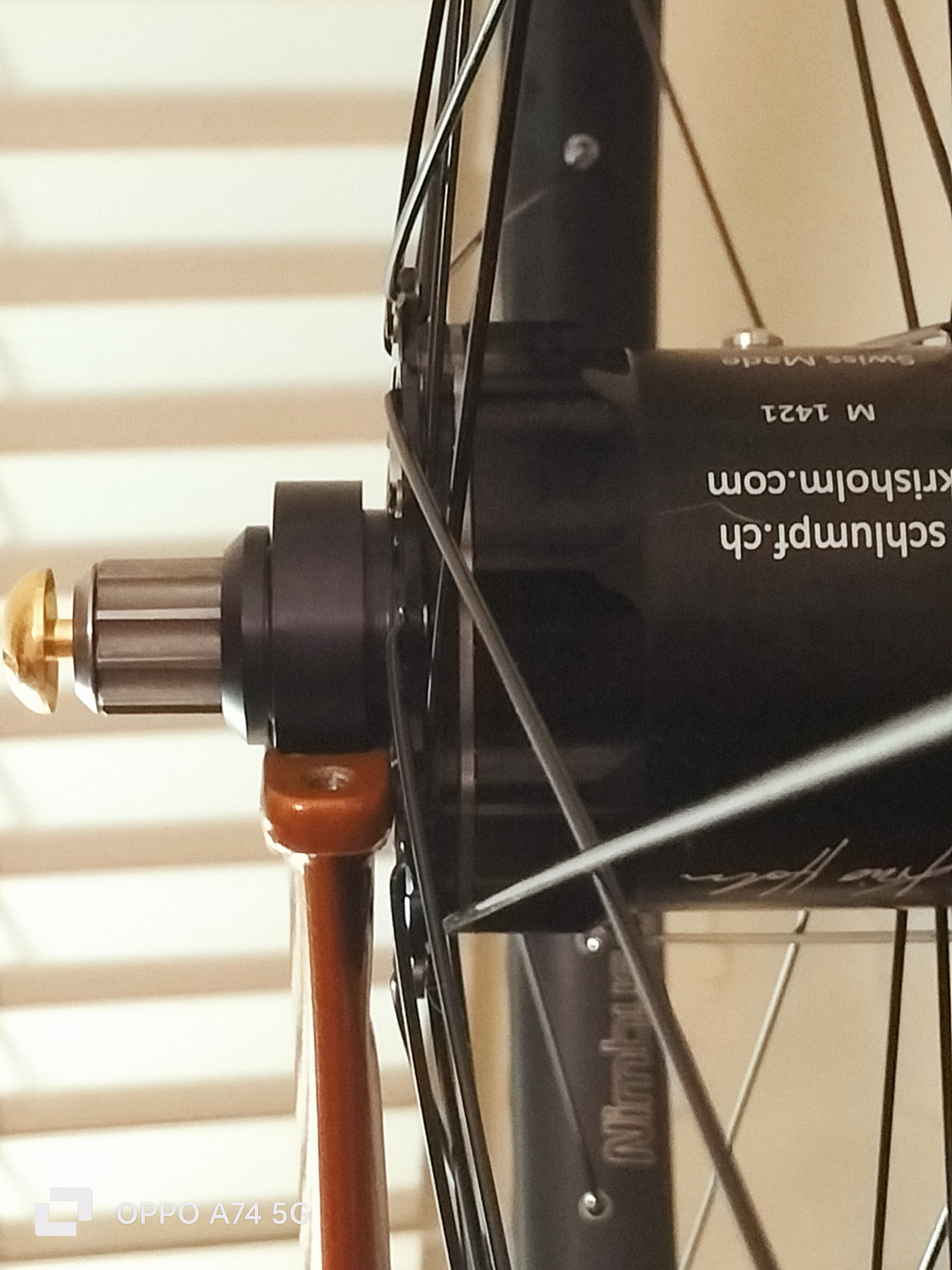
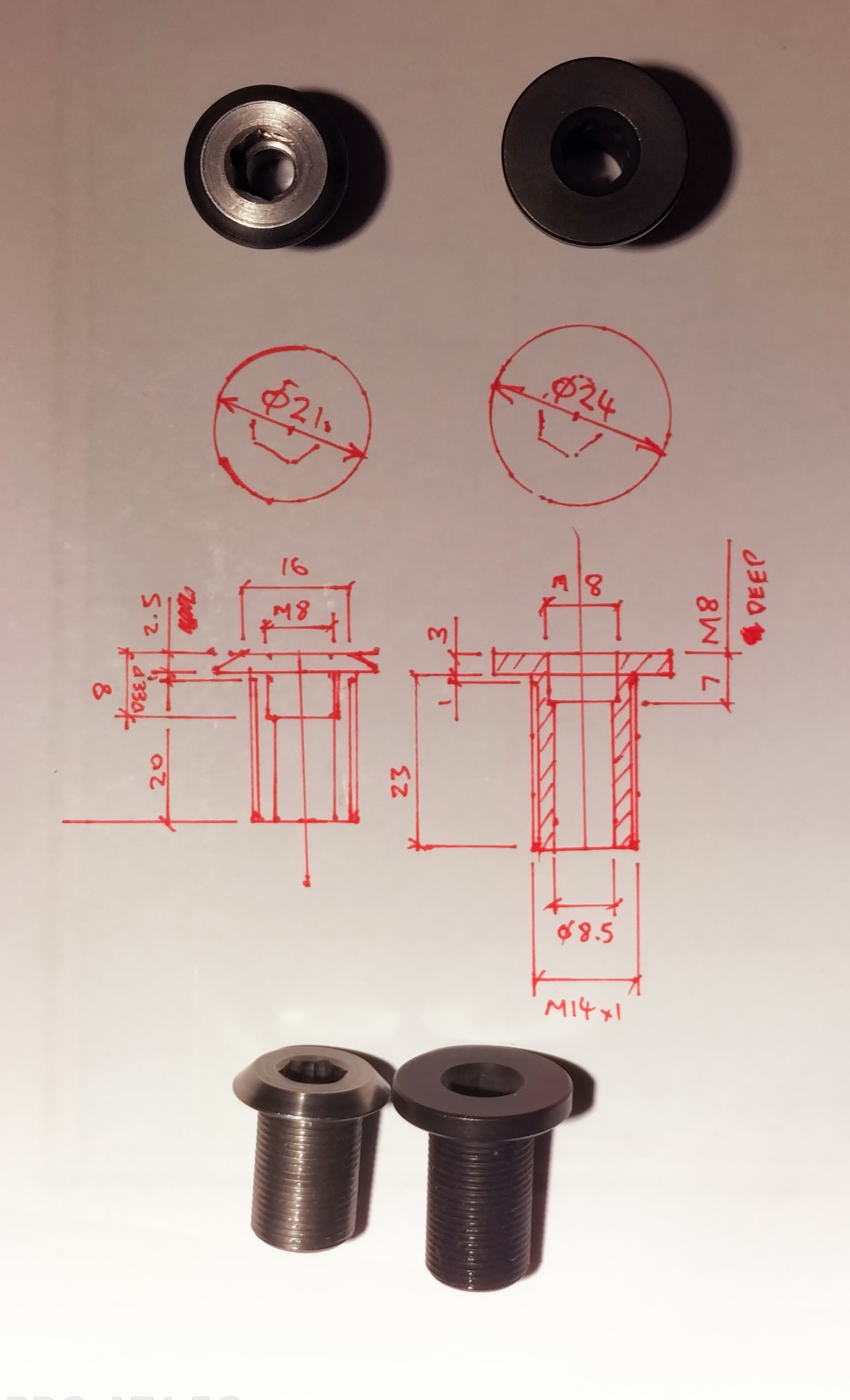
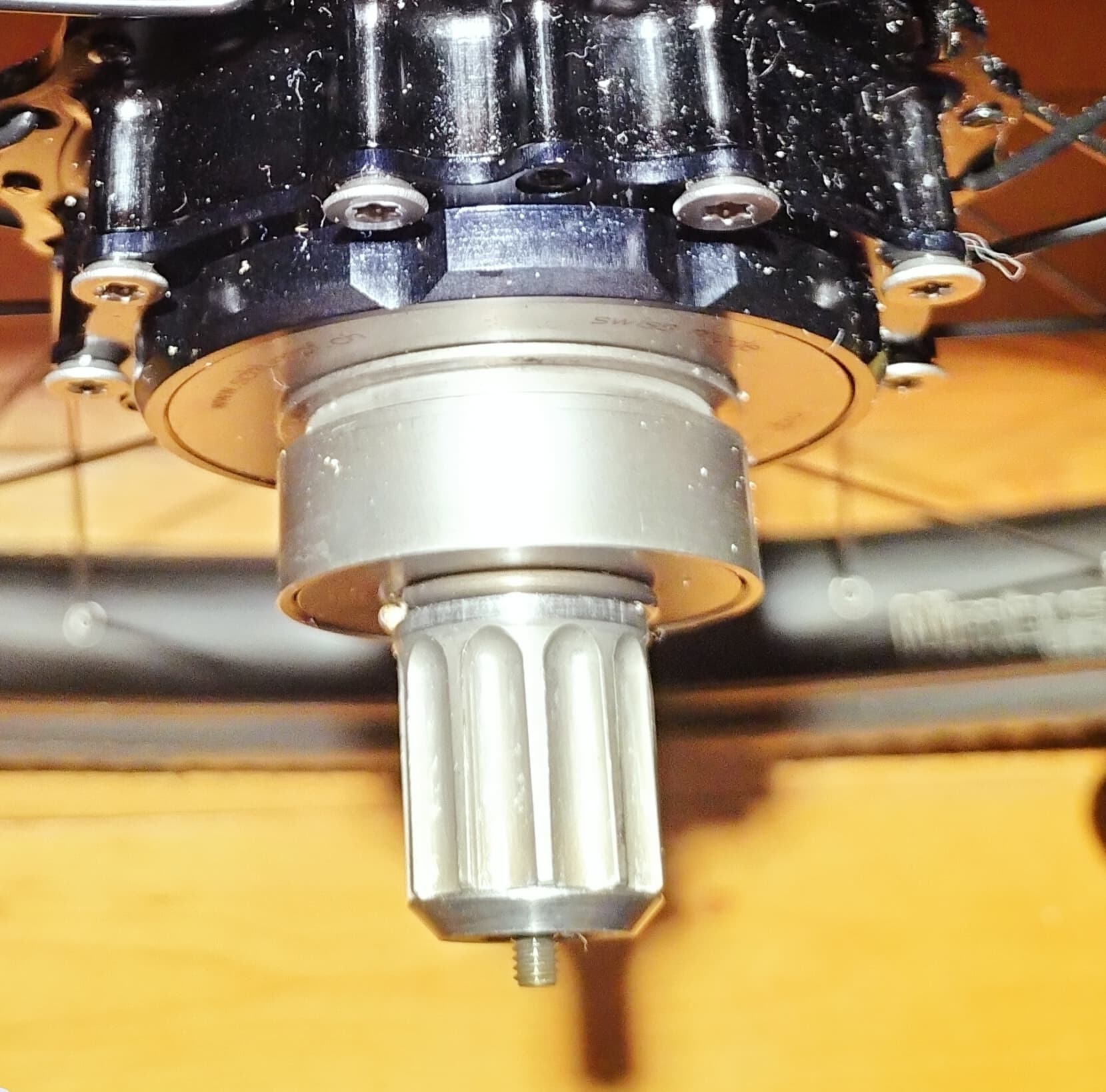
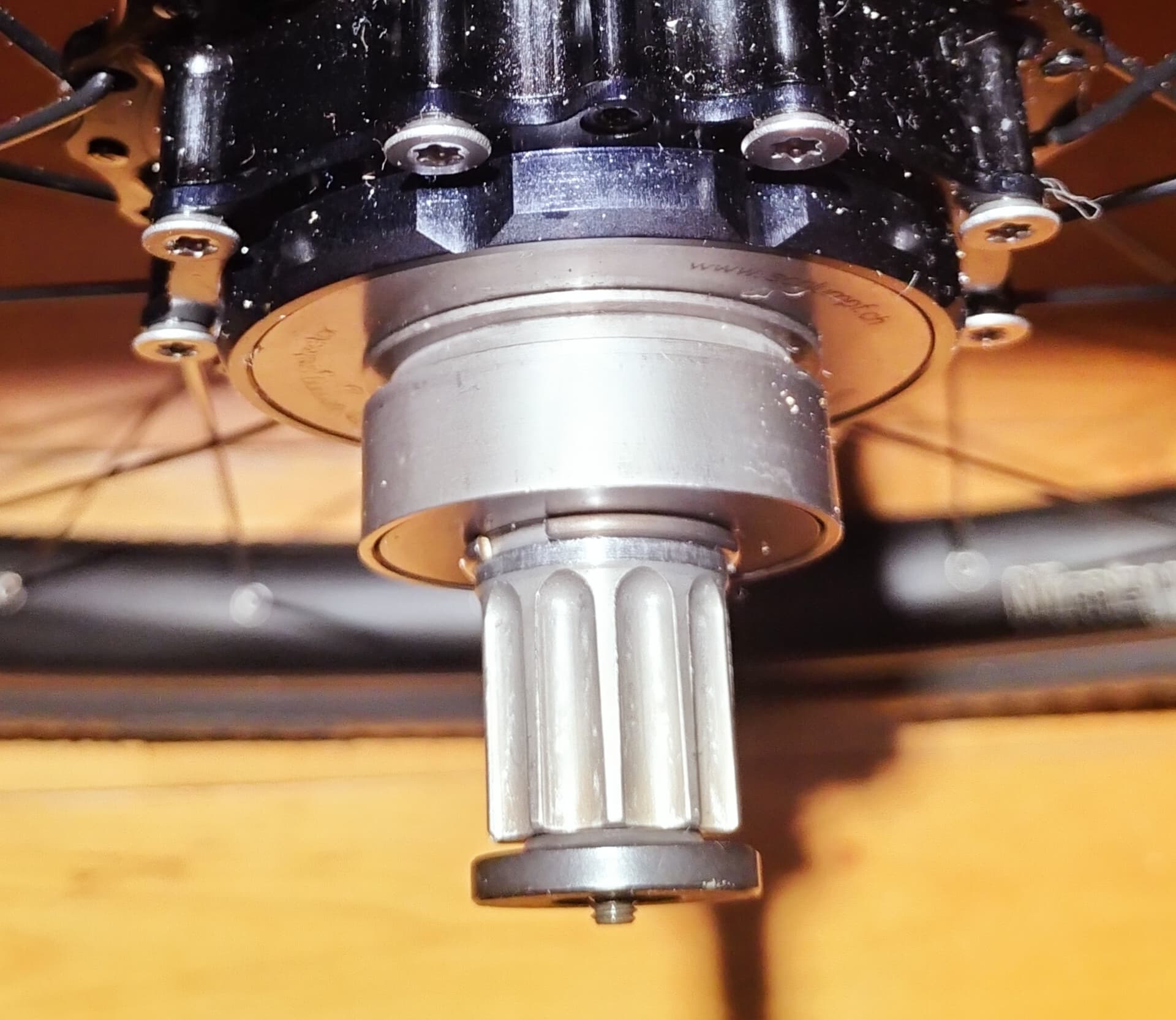
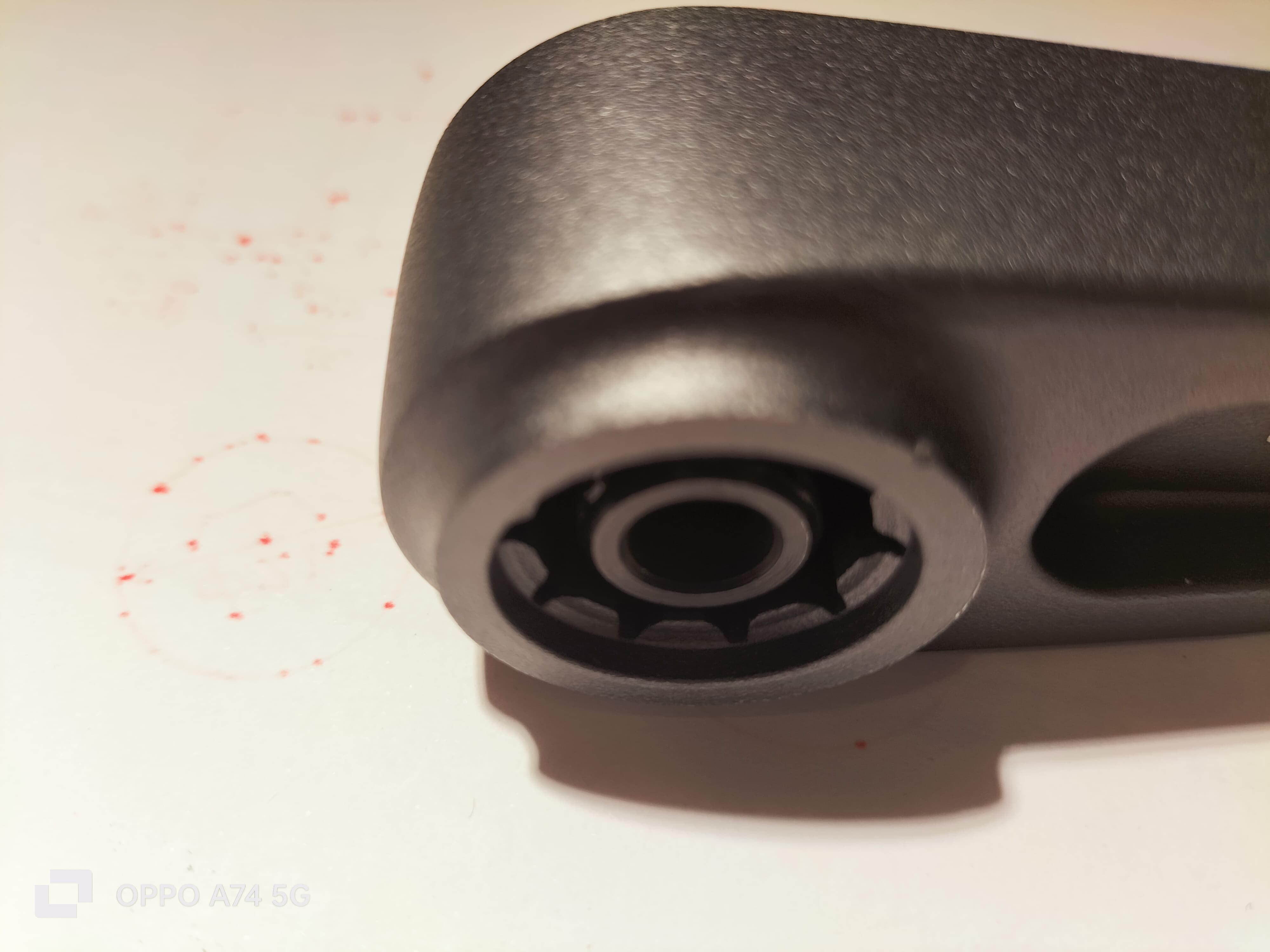
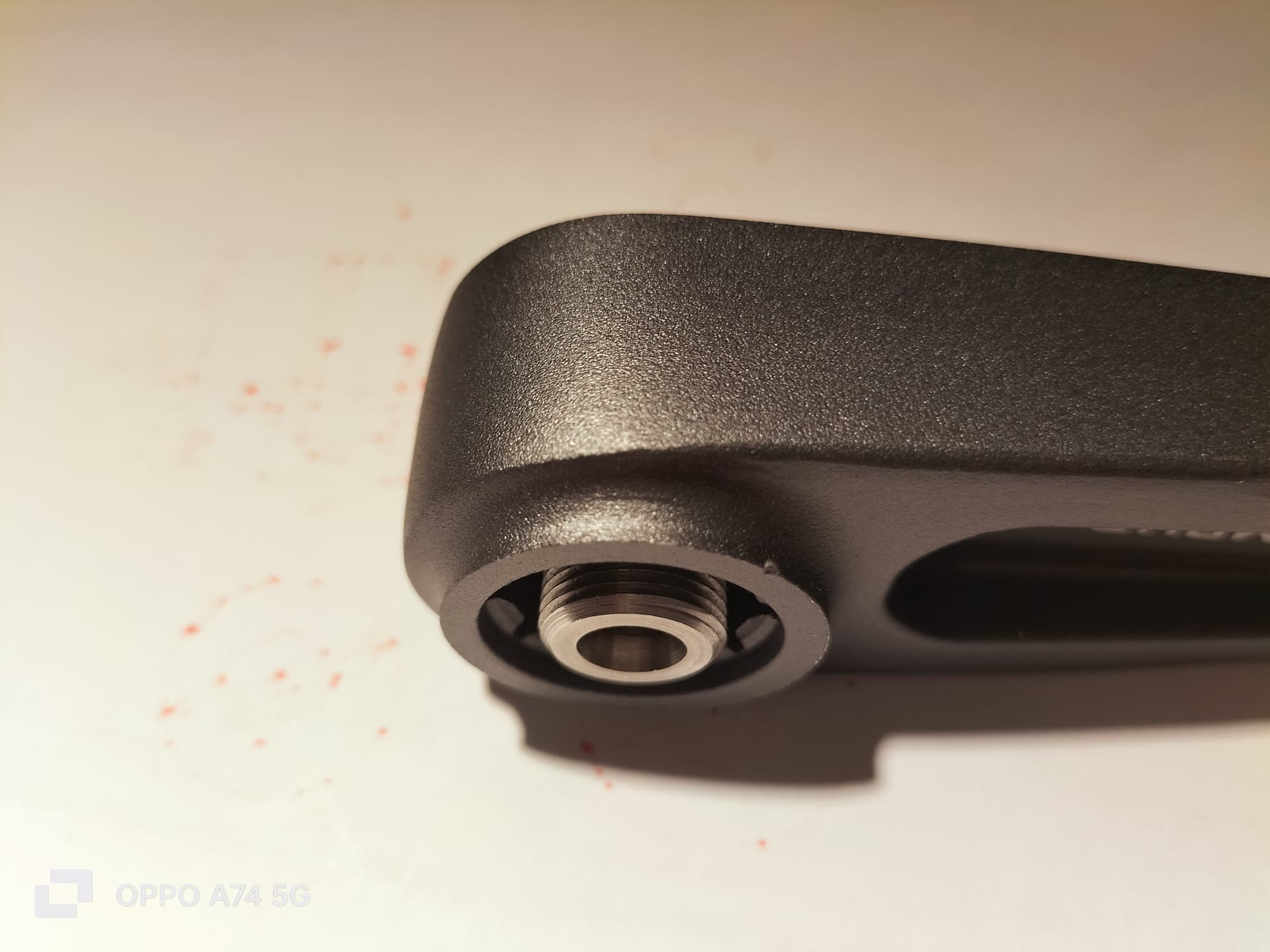
When installing the cranks, I didn’t use a spacer (but I reckon it is better to have one, nevertheless - especially as the adjacent Schlumpf bearing protector rings can move). The gap after banging the cranks together protected by wood blocks and then a bit of final tightening seemed to be 3mm on each side for me. Before doing the cranks, I smoothed the area where the crank bolt head made contact by spinning it around a bit while pressing it in (by being very careful and selecting a tool with the best fit I luckily avoided any deformation).
The hub bearing fitting was a bit anxiety provoking - it is surprisingly hard to be sure the pin is fitting into the 6.2mm hole. When doing the spoke tightening and trueing it is very important to get it in and fairly tight (but not too tight) so the alignment will be right. And when finally assembling the completed wheel, I used blue Loctite on the bearing caps.
It seems like every build is a slightly different journey, but I hope the above information can help someone else.