KH website is not up to date …
Please use UDC UK spoke calcluator which is right, I used it without any issues for both Freeride (47mm) and Freeride 2017 (55mm) rims !
KH website is not up to date …
Please use UDC UK spoke calcluator which is right, I used it without any issues for both Freeride (47mm) and Freeride 2017 (55mm) rims !
Hi, could I please get some confirmation about if I need spacers installing VCX cranks on schlumpf hub.
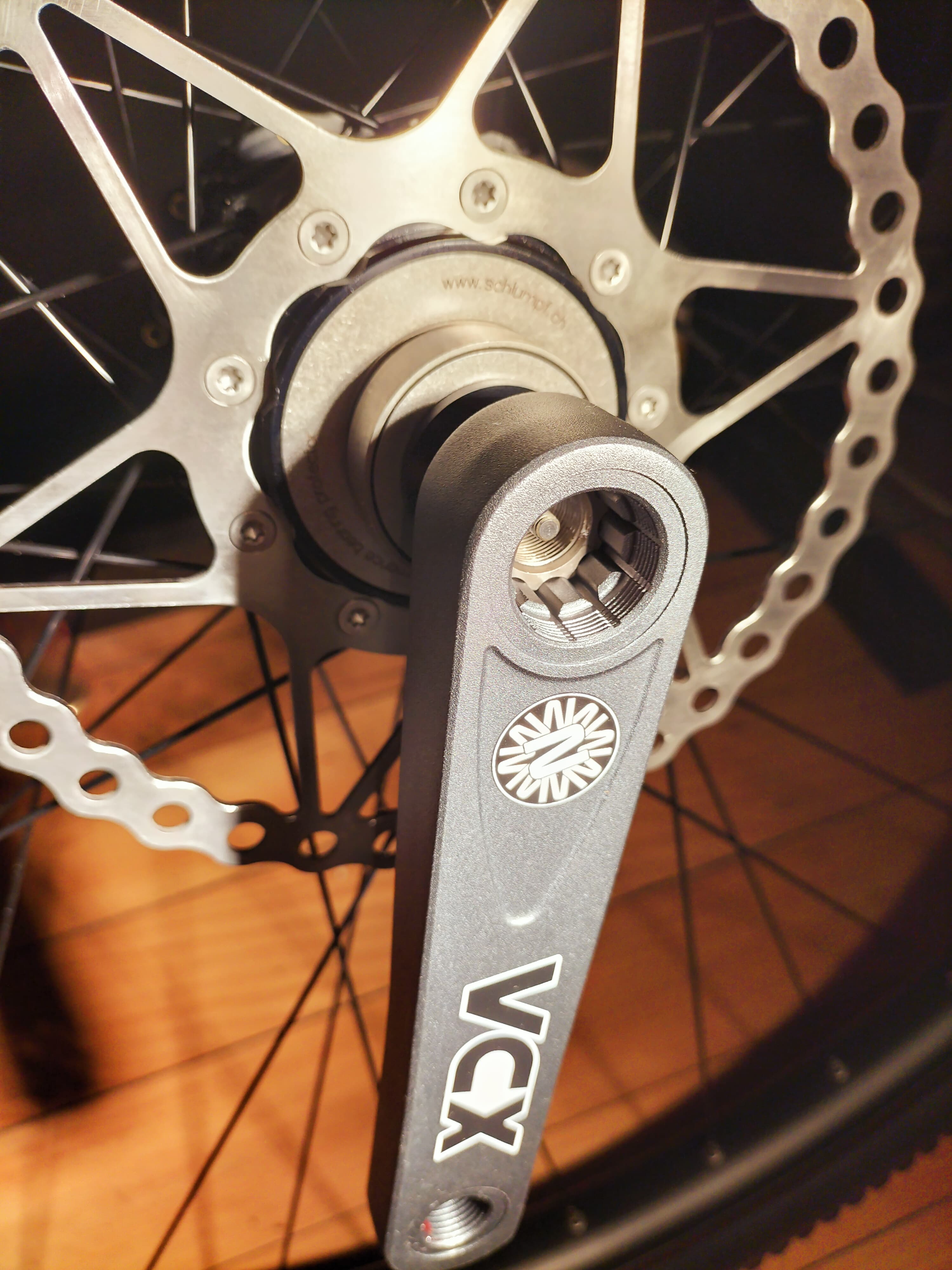
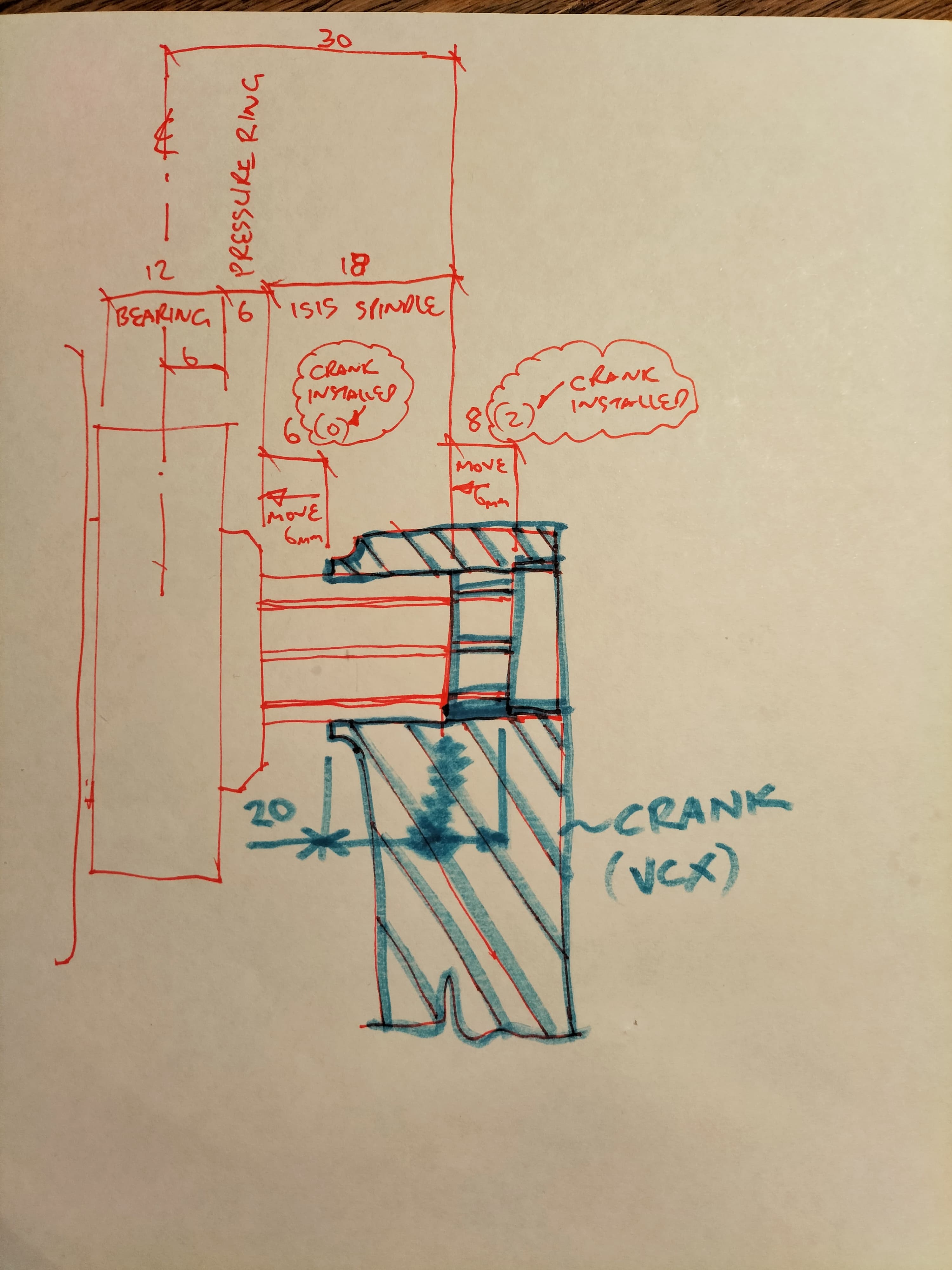
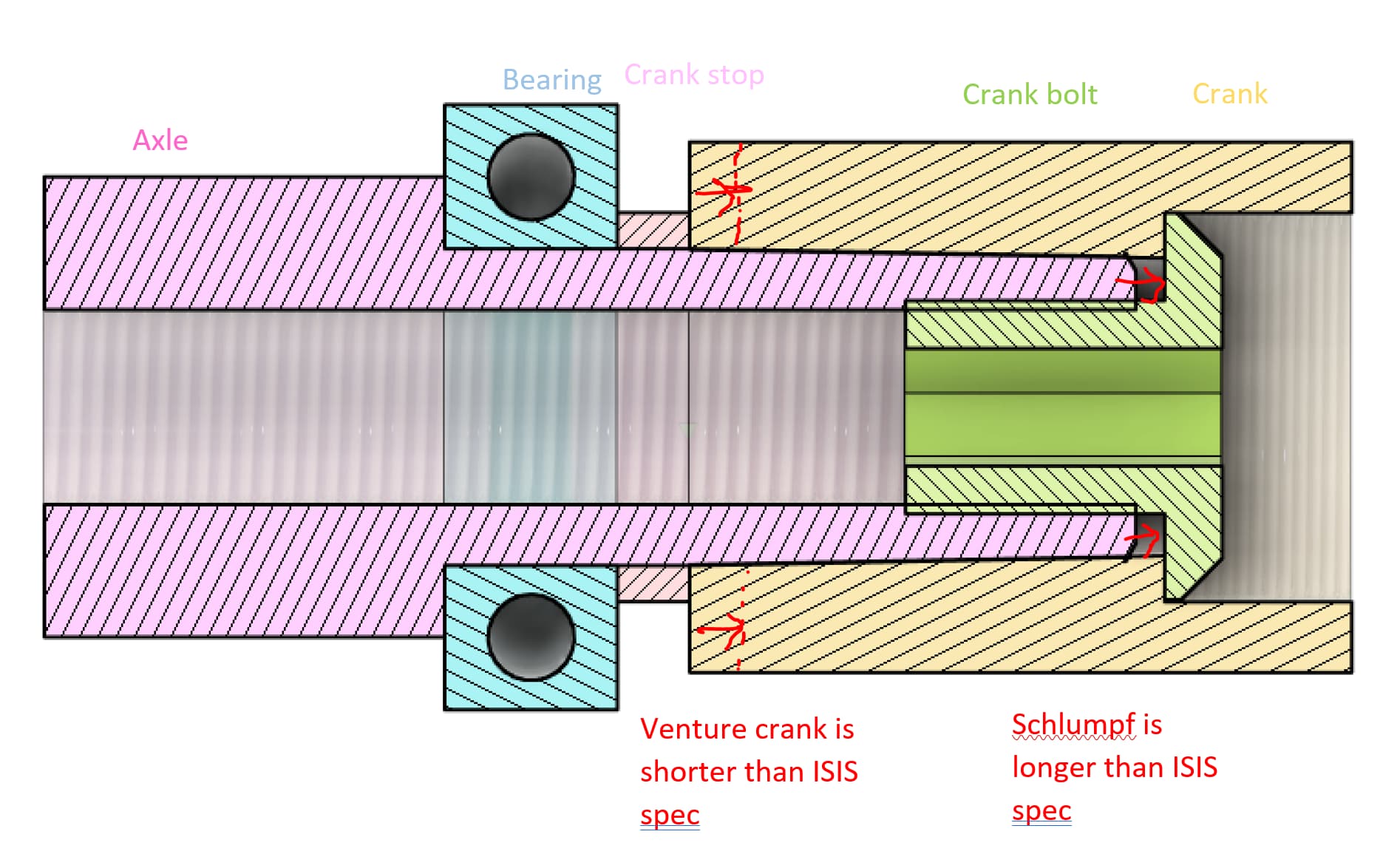
Is the intention to ensure the crank is installed with crank hard against (schlumpf pressure ring) and also with end of hub axle sitting inside the crank with spare space to the face of the schlumpf holddown screw?
In my case, I think if I install VCX cranks without spacers, there will be a 2mm space inside the crank…to allow for any further tightening.
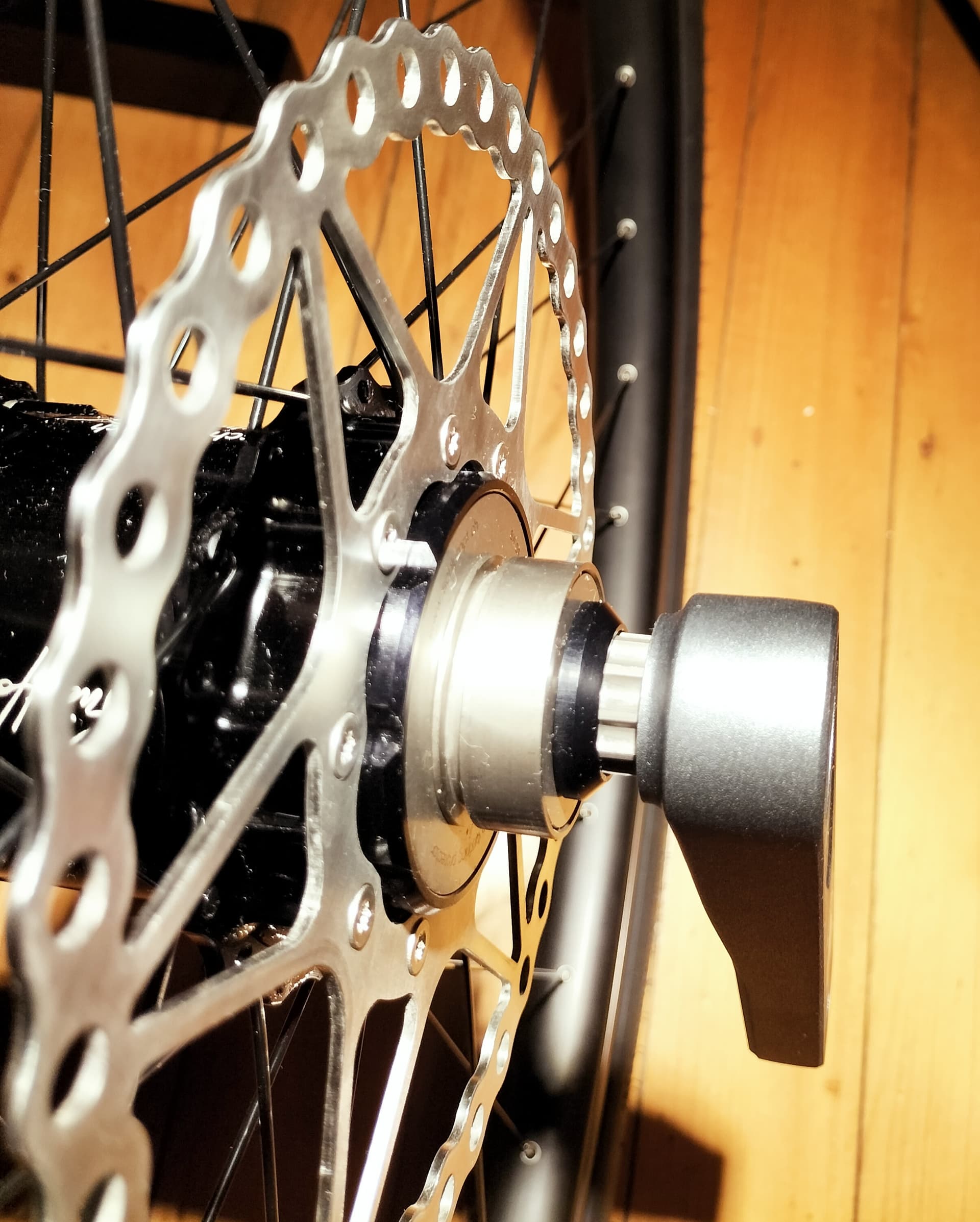
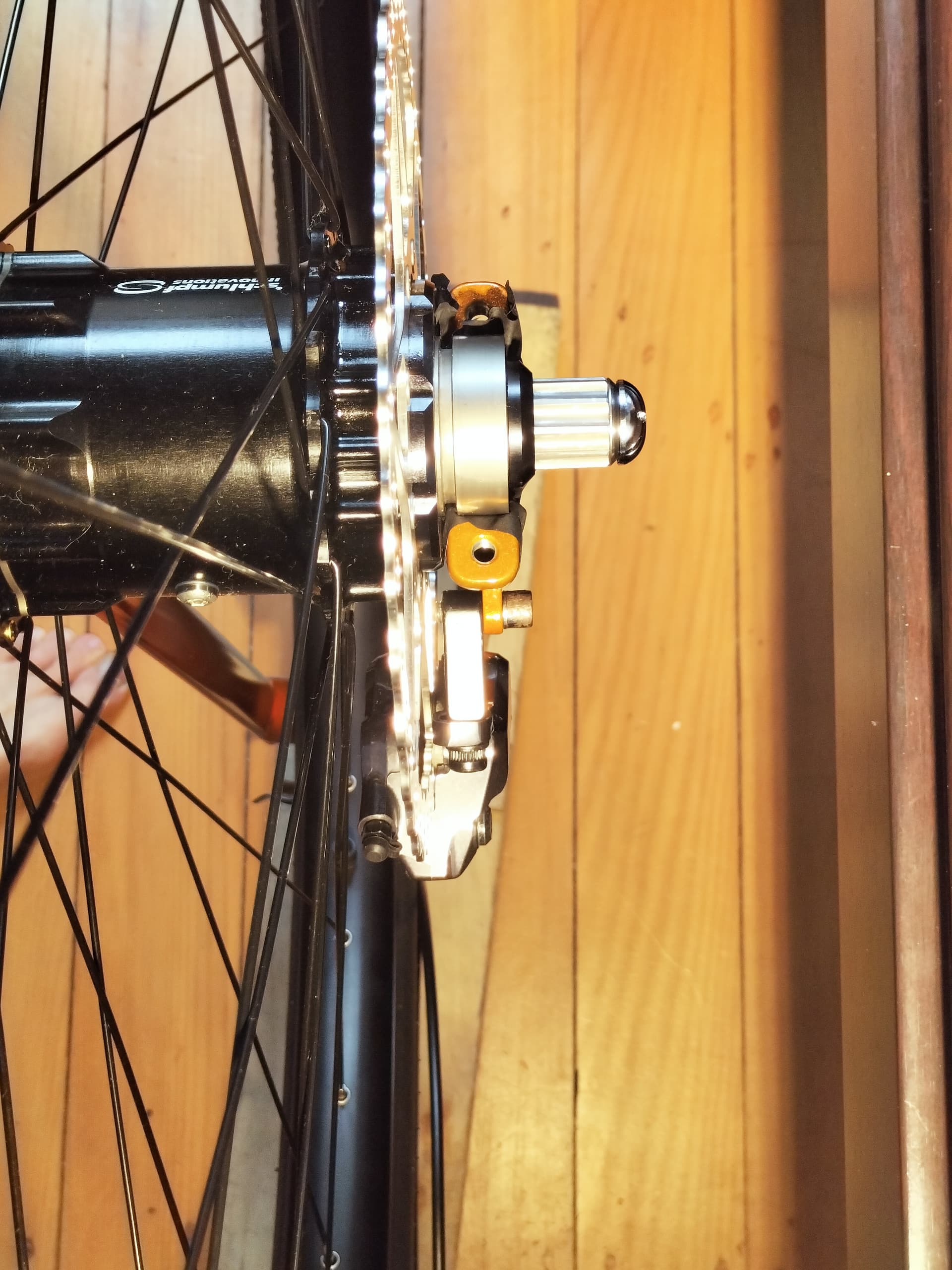
See below photos and sketch of vcx crank located on Schlumpf axle prior to installing with mallets and holddown bolt tightening.
A very quick answer is that yes I think you need 2mm spacers for any crank.
I think there was a post before where someone showed that the axle on these hubs is about 2mm longer than the ISIS spec.
To be clear - my read and interpretation of what Florian has said to me in emails is that he doesn’t believe spacers are needed and the cranks can just sit, torqued to the axle without them pressing against the pressure rings.
The rings being there read for whenever a crank wears enough to touch it.
However my discussions with Roger and my understand of how the ISIS standard expects cranks to be installed is that they have something to press against.
Therefore adding spacers seems logical and sensible and something that can’t hurt things given that the pressure rings are there to catch any crank that does touch it. Meaning that are expecting at some stage to be tightening against.
Not putting spacers on is asking for your cranks to wear and loosen and you may find the pressure rings pop off and rattle.
So yes. I think 2mm are needed 
Reason I’m asking about not using the spacer is because the 125mm bearing spacing is large I want to minimise Crank centres. Also I think the more spline engagement the better.
I might be missing something but I think that by not using spacer the Schlumpf axle bolt will still push the crank hard against the pressure ring.
The crank would need to somehow become 2mm thinner through wear before the schlumpf axle bolt would not be pushing it against the pressure ring?
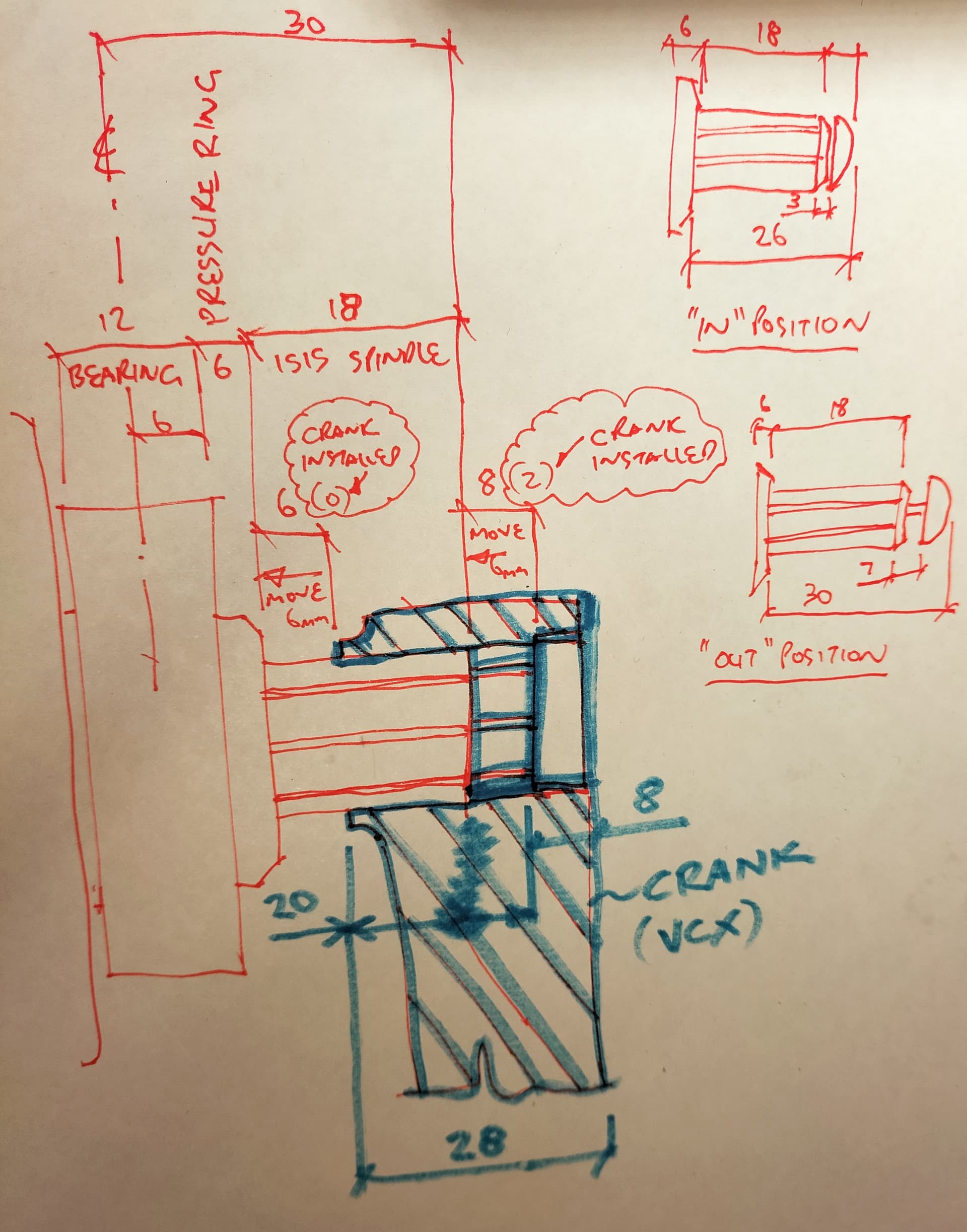
I also measured up the position of the button relative to the crank face in the “IN” position and “OUT” position (allowing for gap for springiness)
See revised sketch below where I added Crank width and also sketches for “IN” position and “Out” position.
“IN” position - top of button is 2mm inside crank face.
“Out” position - top of button is 2mm outside crank face
2mm spacer would move the relative position of the buttons to:
“IN” position - top of button is 4mm inside crank face.
“Out” position - top of button is 0mm outside (Flush)crank face
This could be adjusted by screwing the buttons out by 2mm.
I guess you could be right but I’ve never risked torquing the official or even unofficial pre-tightening bolt enough to get it there.
The gap to close seems pretty large so I think you’d have to go to 55nm before you can close it.
Ah now I understand. I am personally not bothered by a wider stance or Q-factor so I am not the best person to answer regarding this.
I can see the logic of wanting as narrow a stance, but I’d personally not notice 2mm either side wider when using spacer.
It’s going to sound really obvious of me - and a bit direct, but perhaps the best route to just try installing without spacers and see…
I confess I am curious if people can get their cranks on to touch those rings without a deformed bolt 
This was the post that mentioned aspects of the axle and crank interface.
Thanks for forwarding the previous message from Unicycle Harry.
I think it confirms I’m good for no spacer needed.
My understanding is that the main issue is to avoid the Axle Bolt “bottoming out” on the Schlumpf Axle. Bottoming out meaning, there is no space left for the axle bolt to tighten the crank onto the axle (axially) while the face of the crank is forced against the schlumpf pressure ring.
The technical drawings show that the crank “depth” = 18.5mm and schlumpf Axle length =16-16.5mm will allow 2-2.5mm before axle bolt “bottoms out”.
Unicycle Harry identified he had a non-standard Venture crank with “depth” = 17..0 and measured the schlumpf axle length as 17.4mm (I measured 18mm) so needed a minimum 0.4mm spacer [2mm spacer to be safe of bottoming out]
Part message from UnicycleHarry:
A newer VCX crank I have measured 19.2mm, so that would not bottom out.
Simpler combined drawing of a “normal” interface:
Beautiful fit… Thanks Jakob!!
Just installed Shimano XT brakes as well as the schlumpf brake disc (without schlumpf spacers) on my custom Flansberrium 125mm (bearing centres) Frame
Measured 3mm gap from spokes to the 4 pot caliper.
I’ll be the first to admit when I change my mind on a point. I’m now thinking of trying one of my wheels crank installs again with no spacers.
I even wonder if there’s been changes since the first few hubs shipped. As I did find the tightening of my G36 Braus to feel very quick / short, whereas my first wheel set up seemed like I had miles to close when putting cranks on.
It could easily also be that I’ve got better at doing it and using a mallet with aplomb, plus the pre-tightening bolt helping me out. But the fact remains I’m now curious to see if I need any spacers too.
Looking again at your picture I now agree with you that it doesn’t look like one is needed. Thanks! 

Me again  … Best photo I could find in this thread.
Just looking at that final photos by eye I do wonder if the axle has been ever so slightly shortened in newer hubs.
Also the gap that is shared here is after torquing to 40nm - whereas I had about half that gap (admittedly after using a mallet) but I am no itching to take the cranks off and see how they seat on with no spacers.
It’ll make for an excuse to film how one removes cranks from the hub I guess 
Hey Felix,
Maybe I am missing something because Gocup had gaps with his install of VCX cranks and was not able to force the crank against the schlumpf pressure ring enough to stop it spinning. I believe he has the same 125mm hub as me.
I will be waiting with anticipation for how you go with re-installing the your KH moment cranks without spacers.
What is the “depth of engagement” dimension of KH Moment cranks? 20mm?
I have to say,
It is such a bonus having your support building this geared “contraption”… Thank you
Do you think it would be safe to install it as a classical KH brakes - disc is installed on the crank?
It would be safe, but you would miss the whole thing of the Schlumpf inner disc 
Having an inner disc has the following advantages:
Sadly I’m not as diplomatic as @Maxence here
I’d say - no it isn’t safe — as this isn’t how the hub is designed now. It was previously but that proved to be a suspect set up and not in my view ever to be recommended.
And then you miss out on all that has been just detailed as the benefits of the new hubs.
Regarding cranks and spacers - it is a bit annoying that the spacer width seems to be slightly arbitrary - for example, KH and Nimbus cranks seem to fit differently on the same unicycle and need different size spacers. And optimal spacer size can vary anyway after removing and replacing cranks a couple of times. But hey, cottered and square taper cranks on bicycles “back in the day” were much worse!
It seems to be an open question about whether spacers should be used on unicycles though. Some older forum posts seem to imply that the spacers were needed to help keep the bearing in place, which seems a bit weird and presumably does not apply these days.
The Schlumpf hub certainly does not need pressure against the bearings, as evidenced by the bearing protector and the fact that the Schlumpf ISIS splines are manufactured so the tightened crank does NOT get too close to the bearings, and anyway that is what Florian has said. The cranks would not be expected to get to the bearing protector unless they have been installed several times and/or have loosened and become worn.
Also, unicycle (believe it or not) are different from bicycles. The ISIS standards (available free from www.isisdrive.com) specify a spline taper of 1 degree which means that after lightly hand installing the crank, there is about another 4mm of movement available for tightening which gives enough preload before the crank hits a fixed collar so that there is minimal final tightening of the bolt needed. For bicycles this fixed “stop point” is needed so that the sprockets always line up perfectly. But for unicycles this is irrelevant, and for that reason, and to avoid oversizing the axle, unicycle manufacturers have decided to use a spacer instead, and provide a variety of sizes for the spacers.
However, even though the Schlumpf hub does not need a spacer, it seems like it could be nice to have one sitting there, but only if there was not a lot of pressure on it. I have noticed that the Schlumpf bearing protector rings are actually a bit loose and can drift sideways on the axle, so a spacer could stop this (I guess it is mainly an aesthetic thing).
But if there is a residual worry about not having a fixed stop (and possible movement and loosening of the crank) it might be advisable to use some Loctite on the threads (although I imagine the splines should be lubricated).
That’s my thoughts, but I’m not an expert.
Using Loctite/thread lock on a Schlumpf hub is something usual. We’re probably a bunch of guys doing so to avoid the cranks to move.
I have a set of cranks that are too worn to properly sit on the hub. They just keep moving… But with a bit of Loctite, they stay calm. In the last 500+ km, they haven’t even moved a bit! 
So, yeah, definitely, use Loctite if you’re worried.
Great write up of the fuzziness of this topic!
I feel a bit conflicted here as I’ve had it confirmed that spacer are 100% needed for unicycles from Roger at UDC UK and after discussing that this would also apply to the schlumpf hubs. It does kind of contradict what Florian has advised but while I don’t like the idea of really cranking down the cranks into the pressure rings - it seems like you’re asking for trouble to just have a gap at the rear side of the cranks - so a closed installation feels more inline with the wider unicycle advice and guidance on this.
I’m also in no way an expect and less technically knowledgeable than you @gocup - but I guess we have to pick a stance or school of thought here and try and live with it.
Maxence quote:
“. Using Loctitre/thread lock on a Schlumpf hub is something usual. We’re probably a bunch of guys doing so to avoid the cranks to move.
I have a set of cranks that are too worn to properly sit on the hub. They just keep moving… But with a bit of Loctite, they stay calm. In the last 500+ km, they haven’t even moved a bit!
So, yeah, definitely, use Loctite if you’re worried.”
Apologies, but could I ask how the Loctite of threads on schlumpf hub helps stop cranks movement.
If the is a gap between crank and schlumpf pressure ring [due to a slight taper in splined axle?] And I presume there is Loctite on the axle bolt - axle thread, then won’t the crank move inwards as it wears and moves into the gap? Won’t the axle bolt just stay where it is due to Loctite and crank moves away from it?
Perhaps you are right, but at a microscopic level perhaps the bolt, spline and crank could be thought of as a unit when tight, but if the bolt first loosens just a tiny bit it initiates/allows some small motion of the crank which begins the “walk of the crank” which rapidly gets worse (and easy not to notice on a Schlumpf because of the free play in the gears). However, if the bolt is initially tight (wedging the crank onto the taper), and the thread is locked, the crank doesn’t really have a chance to wear the spline. Anyway, locking the thread is certainly not going to make matters worse.
Remember the song lyric “from little things, big things grow” - I guess wiggle propagation is a bit like crack propagation, and if some of the initial possible movement is avoided by a thread locker, there is less chance for growth?
EDIT: I was actually wondering if Maxence meant Loctite on the splines as he confirmed below. I agree that is definitely a good thing for worn crank/spline interface (not much else to do except buy new parts!). But for brand new clean components I think (hope?) that getting a good tight fit and just using Loctite on the threads would be a good approach. But like I said: “I’m not an expert” 
I have been unclear, sorry! I put the Loctite on the splines. The cranks are so used they have play when fully tightened. So the Loctite help to fill in the holes between the cranks and the hub and locks them in place