Great project!
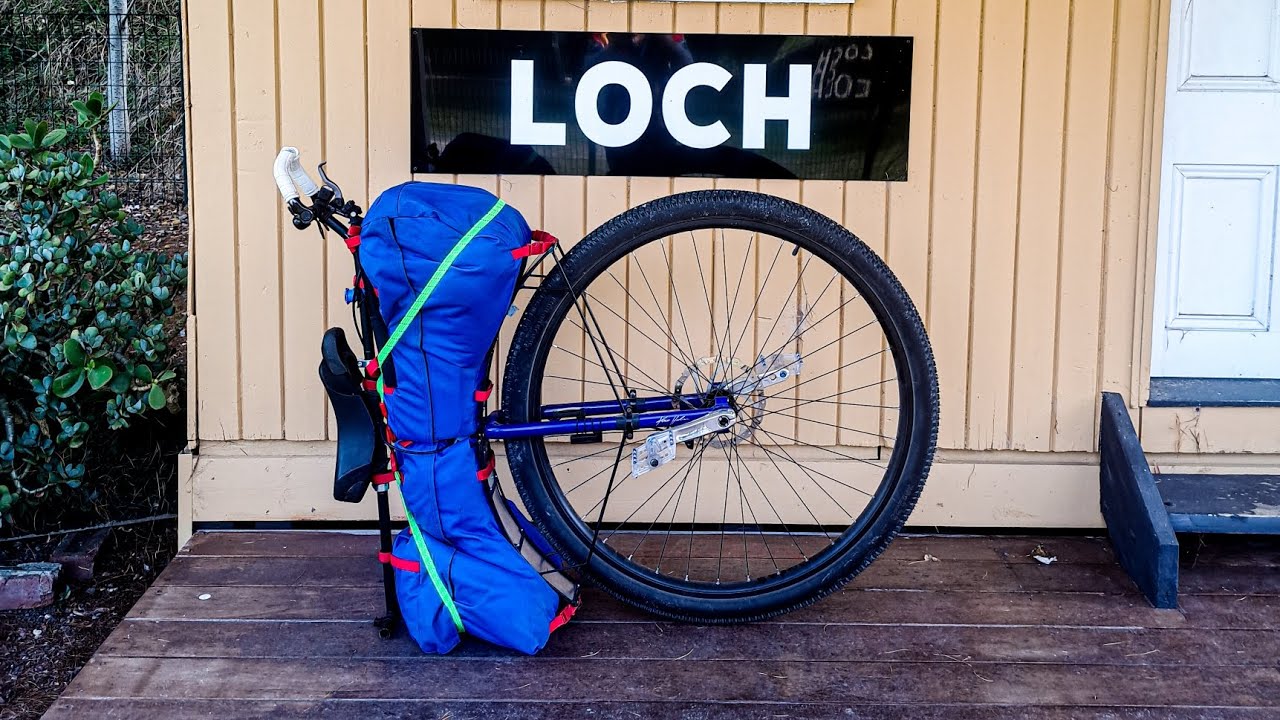
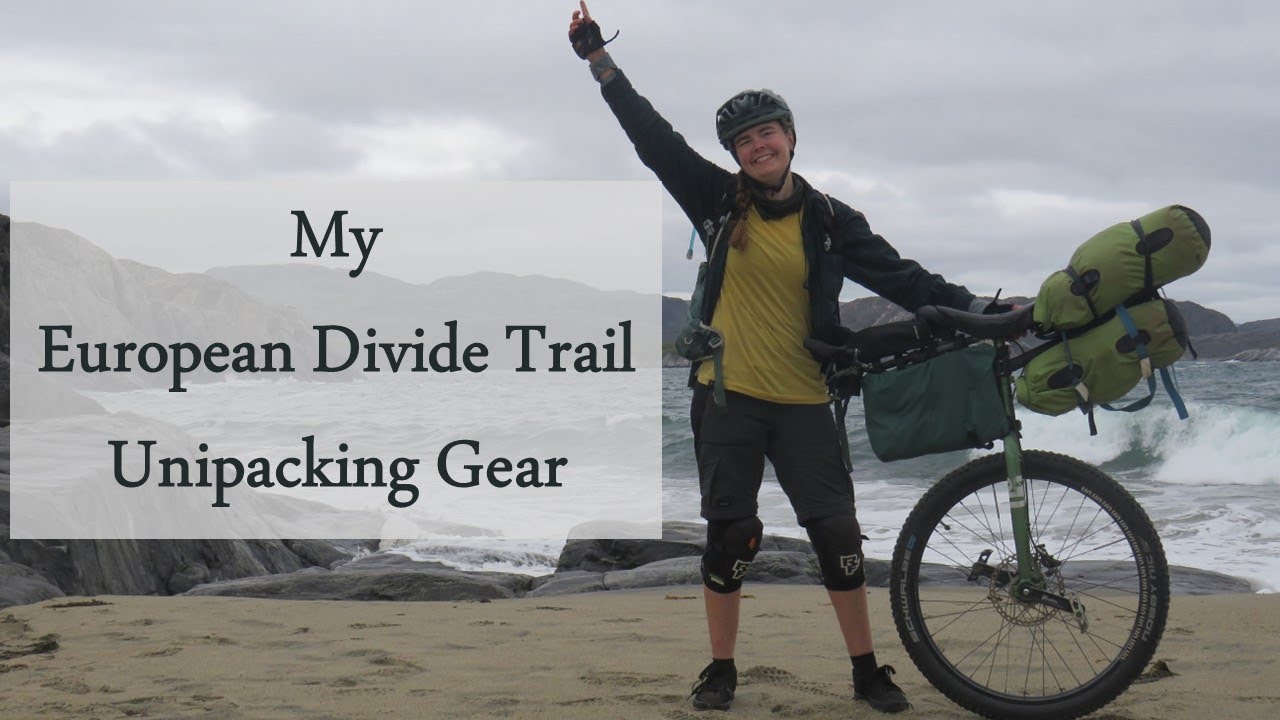
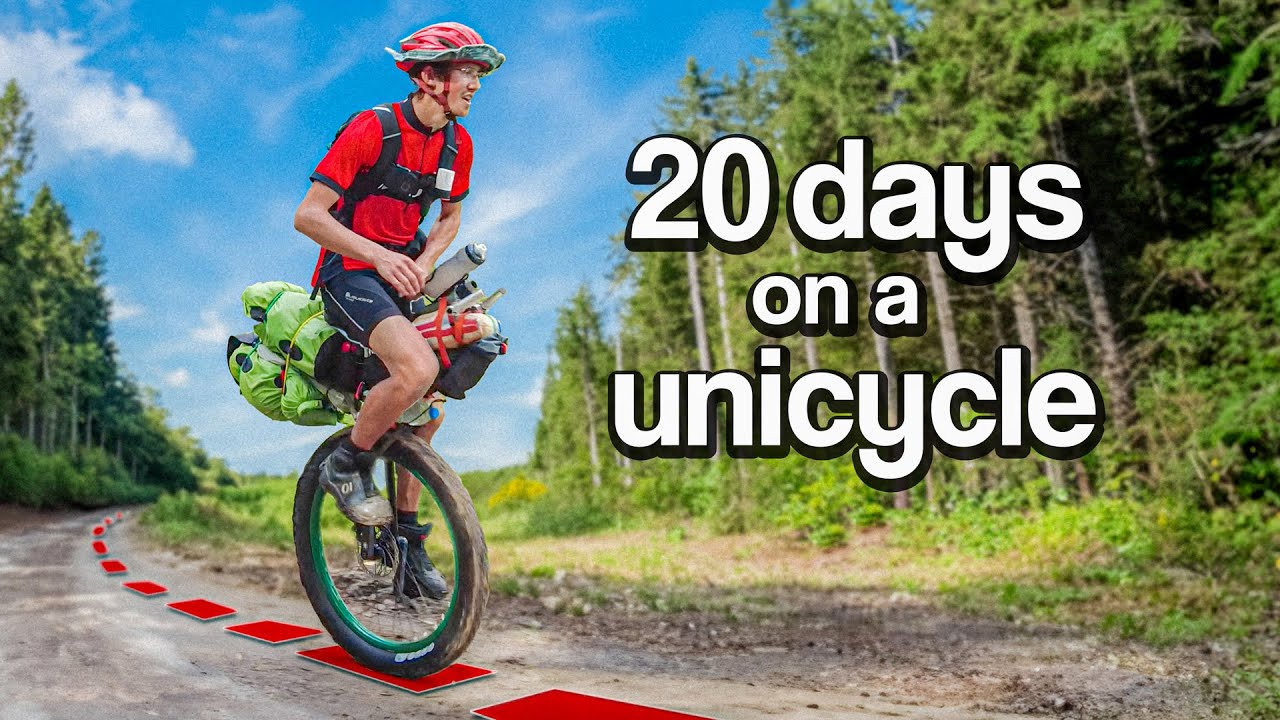
I am not a very experienced unicyclist, but I did two 3-days trips in Italy in July 2023 and a 4-days trip from Brno (Czech Republic) to Bratislava (Slovakia) through Austria in June last year. For both trips, I used my 29" RGB with a setup similar to Becky’s (see links and photo above). This meant that I had to be much more selective about the gear I carried than you would have to be in 36” with a touring bags. For a few-day trip, it worked well, but for a longer tour (more than a week or so), I would have to make some changes. In particular, I have a tent that I love (a Salewa Litetrek 2), but to save space and weight, I used the tarp + bivvy bag option. This worked well, even in a rainstorm in Italy, but I could never get a deep and restorative sleep/was always on high alert. I also had problems with mosquitoes in Italy, so I bought a mosquito head-net for my trip last year. However, it turned out that I didn’t need it this time. I’m not sure how comfortable it would have been though.
Some European knowledge sharing:
* it is a bit off topic but I think it is the kind of information I would be happy to get if I was planning a trip to Australia… hope it will be useful.
First of all, central and western Europe is highly densely populated (esp. if compared to Australia), so on local roads, it is rare to do more than 20km without the option to go through a village…
Food and water: On the contrary to your habits, or even when hiking or paddling where you are usually avoiding the villages, you don’t need to carry much food and water (nor waste). As Aurélien also wrote, you can easily buy food day after day (except maybe on Sunday/Holidays, but some service stations, bars, and restaurants will still be open). In both trips, I also had 2L of water capacity, but I was rarely carrying that much, except in the evening/after the last water-stop.
Google Maps is a practical way to check the opening hours of grocery stores, as it is at least country, but often region, dependent… I actually use Google for everything (food, public transport, points of interest,…) except the map! For water points, I was mostly relying on OpenStreetMap, and it worked surprisingly well! I have OSMand on my phone to have proper offline maps, and one of the map profiles was always showing the water and grocery market POIs…
Regarding planning, I mostly used Opencyclemap , Brouter.de , and just reading the map as it comes. Last year, I followed a bit the EV13 which made navigation much simpler. The EuroVelo website (https://en.eurovelo.com/) has country specific pages that can be informative even if not following any EV. Komoot and Strava are also very popular and can be used for inspiration (or tracking).
Overnight: Sadly, it is forbidden to wild camp and even bivouac (wild camping only from dusk till dawn) in Germany (and also in Austria I think)… So the closest way to do that is to ask a farmer/villager to spend the night on their land. There is even a website to find people that accept travellers to stop in their garden:
The hosts are mainly in Germany, but there are also a few in neighbouring countries. Another option is private/for-a-fee camping (campingplätze), or finding one of the free municipal campsites that still exist (usually under the name Stellplatz). Be warned, the latter can also be designated places that are only suitable for vans.
Denmark is much better in this regards, even if it is not quite on a par with its northern neighbours and their allemannsretten tradition (~ free right to roam). Apparently, there are lots of dedicated bivouac areas especially in the public forest.
In general, I would recommend looking at the regulations for each country and asking the locals about the laws (and customs) when you arrive. Asking Warmshowers hosts is surely a good way.
Alternatives to Warmshower:
- https://www.bewelcome.org/ (never used, but recommended in a cycling group chat I am part of)
- Couchsurfing
- If you are ready to learn Esperanto: https://www.pasportaservo.org/
In moments of despair or sudden urge for a warm bed, booking.com often does the job: the map option is quite practical to optimise the price/km to pedal ratio.
Climate: In northern Europe, the best months are generally June and July, it can start to be quite autumnal in September. So, if you can, I would rather advise to go north by train after the Unicon and then pedal down back to Central Europe. Temperature wise, your set-up seems reasonable, I would be more worried by the rain and wind combo in end of September/October, especially when on the coast: Denmark, northern Germany, the Netherlands, … I usually use www.timeanddate.com for a quick survey of the monthly averaged temperatures and precipitation. Example with Kiel (a city in northern Germany, close to the dannish border): Climate & Weather Averages in Kiel, Schleswig-Holstein, Germany
I probably should stop before getting completely off topic… I’ll try to come to the UNICON this year, would be nice to finally meet some other uni-packer/tourer IRL!