Oh geeze my apologies I forgot about this graph. Sorry about that.
Edit: it’s super helpful, and I’m totally rethinking my original size preference. I think low 30s at max.
Oh geeze my apologies I forgot about this graph. Sorry about that.
Edit: it’s super helpful, and I’m totally rethinking my original size preference. I think low 30s at max.
I think the asterisk worth adding here is: Unicycles have always tended towards wide rims. (Generally within the range recommended by tire manufacturers, but always toward the wider side). For reference: a dominator 2 is 33mm inner width, mad4one 38.8mm, QX-RGB is 38.6mm
I have no testing of my own to back this up, but I believe wider rims produce less “folding” when you load the tire sideways, which on a unicycle we might do a bit more than on a bike. I personally would love to try this out at some point and I think there is potentially an argument for running slimmer rims than the unicycle market has traditionally done, but I thought this might be an important point here.
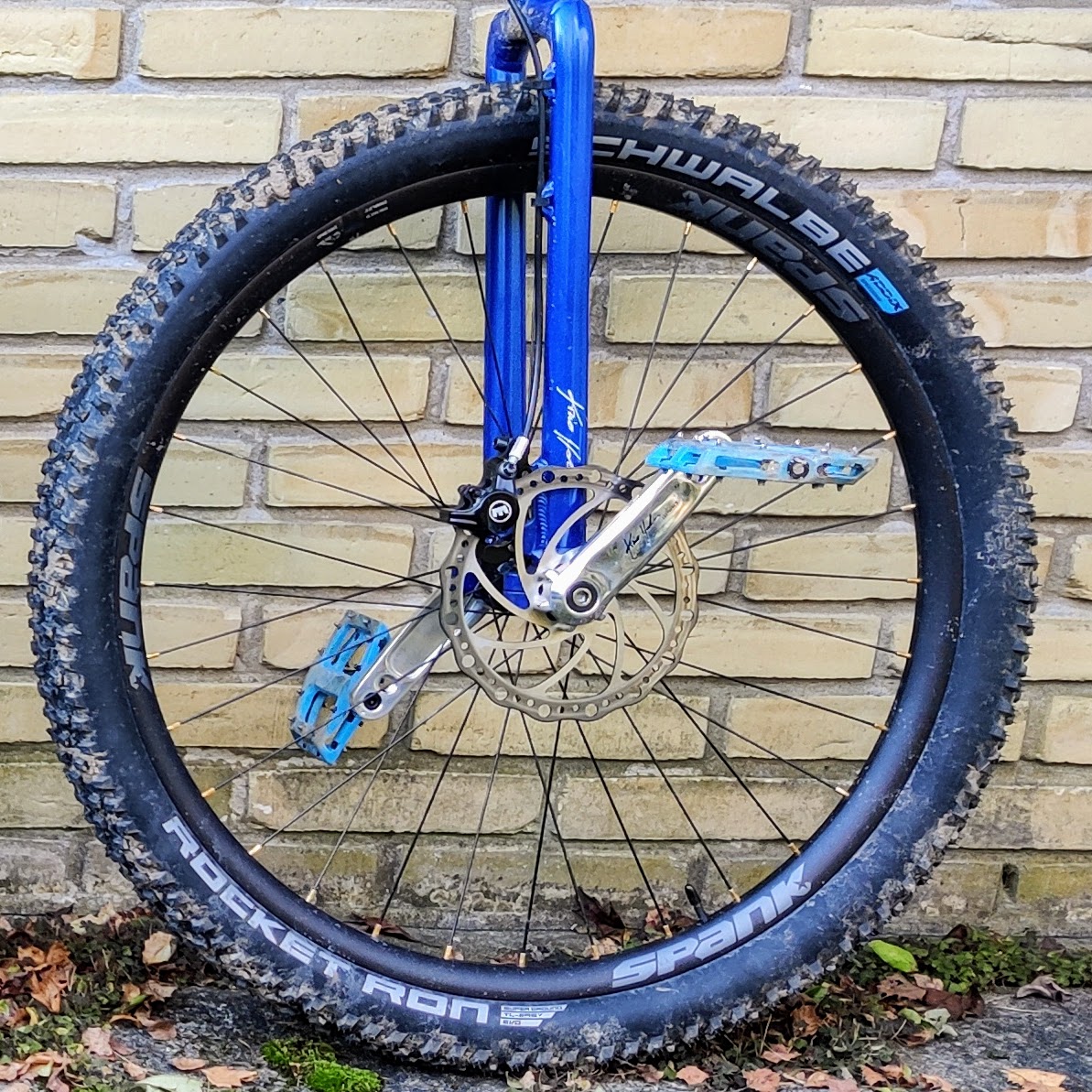
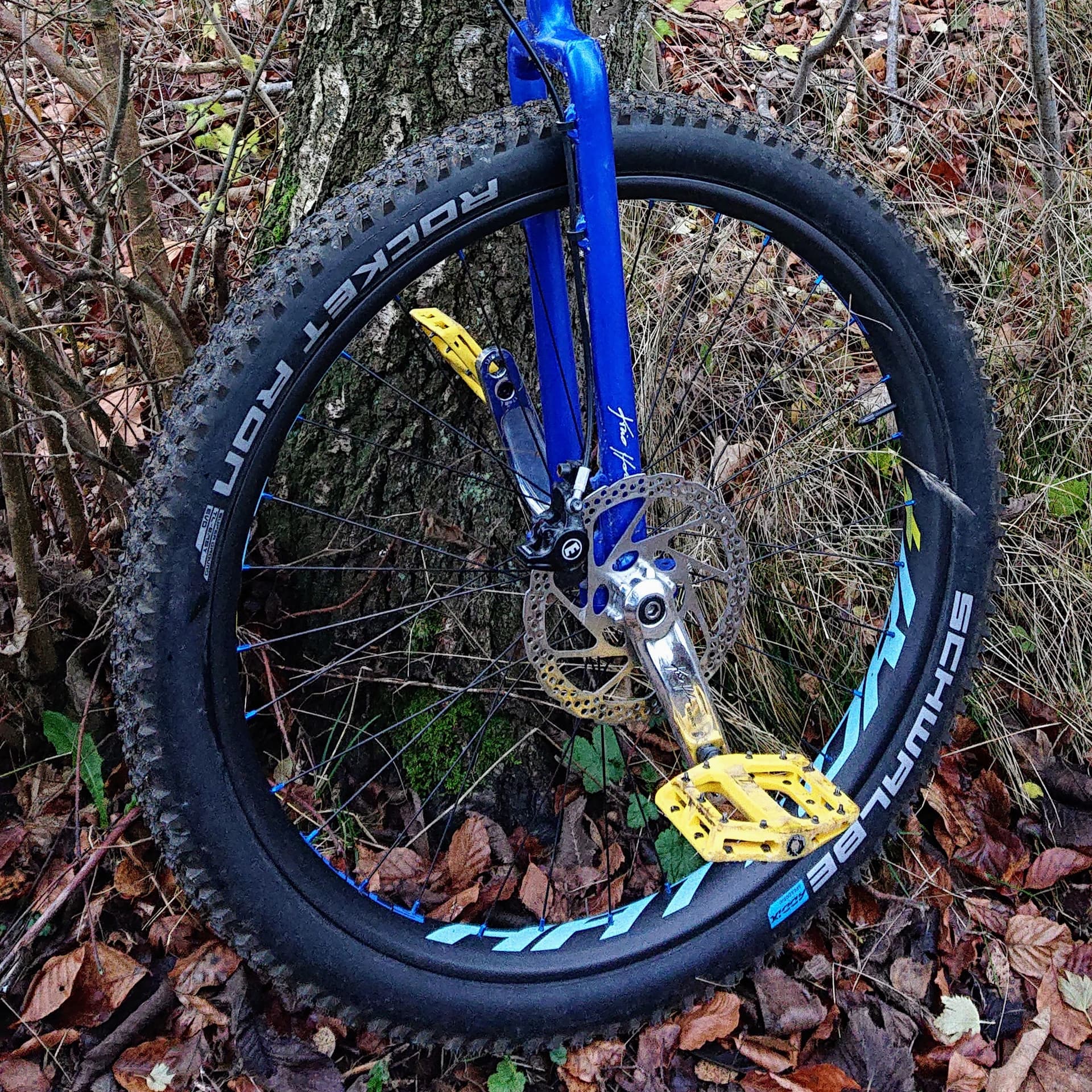
All my unis have wheels built by myself. I started out with some fairly cheap alu rims before I ventured into carbon. I now own three carbon rims. The last waiting in a box for a Schlumpf hub.
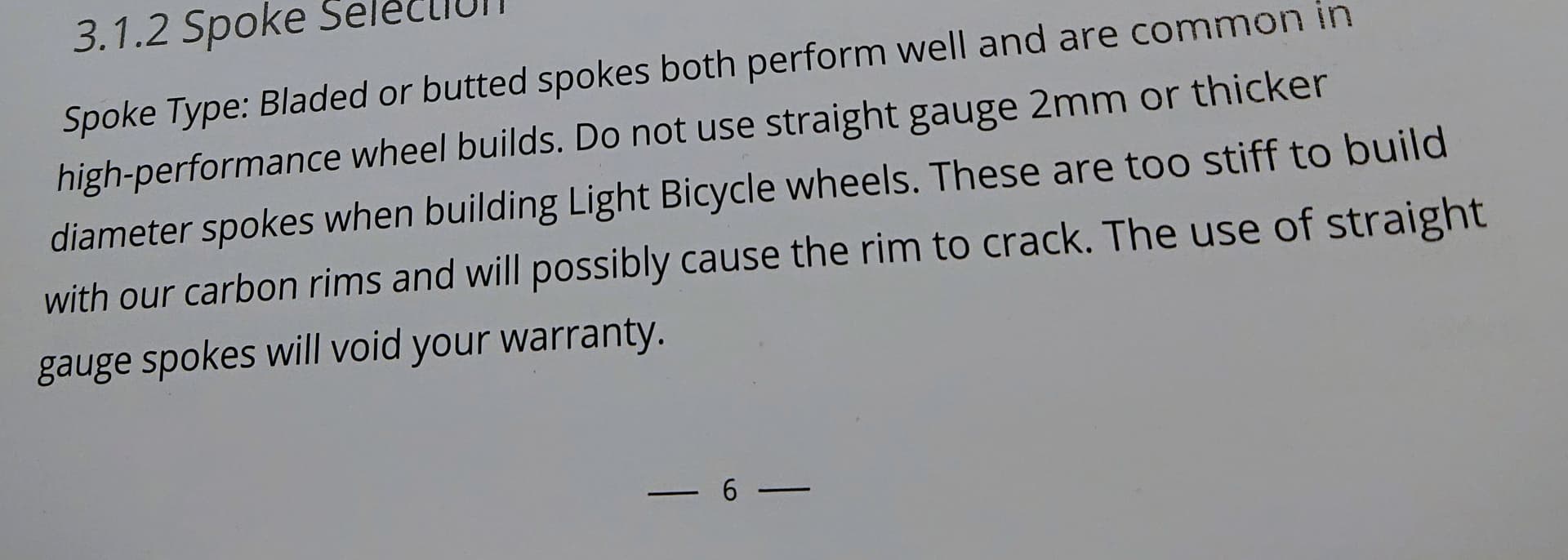
Spokes - for Carbon they need to be double butted. Light Bycycle even states in their “user manual” delivered with their rims that “use of straight gauge spokes will void your warranty” .
For the theoretical best build besides using an asymmetrical rim you can use slightly thicker spokes on the disc side and thinner (more elastic) spokes on the non-disc side.
To quote Sapim from their web-page “Some professionals use the CX-Sprint on the drive side and the CX-Ray on the non drive side. This shall bring a more equal stiffness on right and left side in one wheel.”
Note that drive side translates to disc side for unicycles as this is where the cassette of a regular bike causes a big dishing effect at the back.
In general 32h gives more options for off the shelf rims. I build my 27.5" initially with a Spank Race 33 rim (ID 28mm, alu, 500g), until I by accident found a very good deal on a carbon rim (ID 45mm) in a store and then I switched the rim (even reusing the spokes). It sure looks nice but the old spank was also good looking.

And btw I also agree with the others that very wide rims are not an advantage. They make tire selection slimmer. I would choose ID ~33mm as it can probably run most tires from 2.25" → 3.0".
I originaly had a 2.4 and loved it, I moved up to a 2.6 and it’s awesome, I wish I had a slightly wider rim for the slightly wider tire. But since I dont, I’ll move back to 2.4. I’d still like a 2.4 on a 35mm rim. The tire will be more stable at lower pressure. I feel the 2.6 a bit weird sometimes on drops or techy sections. The sweet spot of tire pressure it very hard to find with my current configuration.
For tire width and rim width, we need to keep in mind that back in the days, people had 30mm rims with 3.0" tires on their mtbs for DH. There’s no real limit, but the bigger the difference, the less stable the tire will be at low pressure. And low pressure = more grip.
I thought the reason people were moving to bigger volume tires was to run lower pressures? I’m trying to understand your statement about moving to a smaller tire so you can run lower pressures.
A few questions as I build my cart. I’m liking this Light Bicycle seller.
Thanks, again, in advance for any insight.
I really like the AM933 rim that I have had for a few years on my G29. I use it with a maxxis forekaster 29x2.6 tire
I use it mostly for “flowing trails”. At home, there is little difference in altitude and a lot of mud.
For the hooks, you don’t have to worry. From what I’ve read, I wonder if the hooks have any use on a rim this wide. It seems that the interest is for tubeless road bikes with very narrow rims.
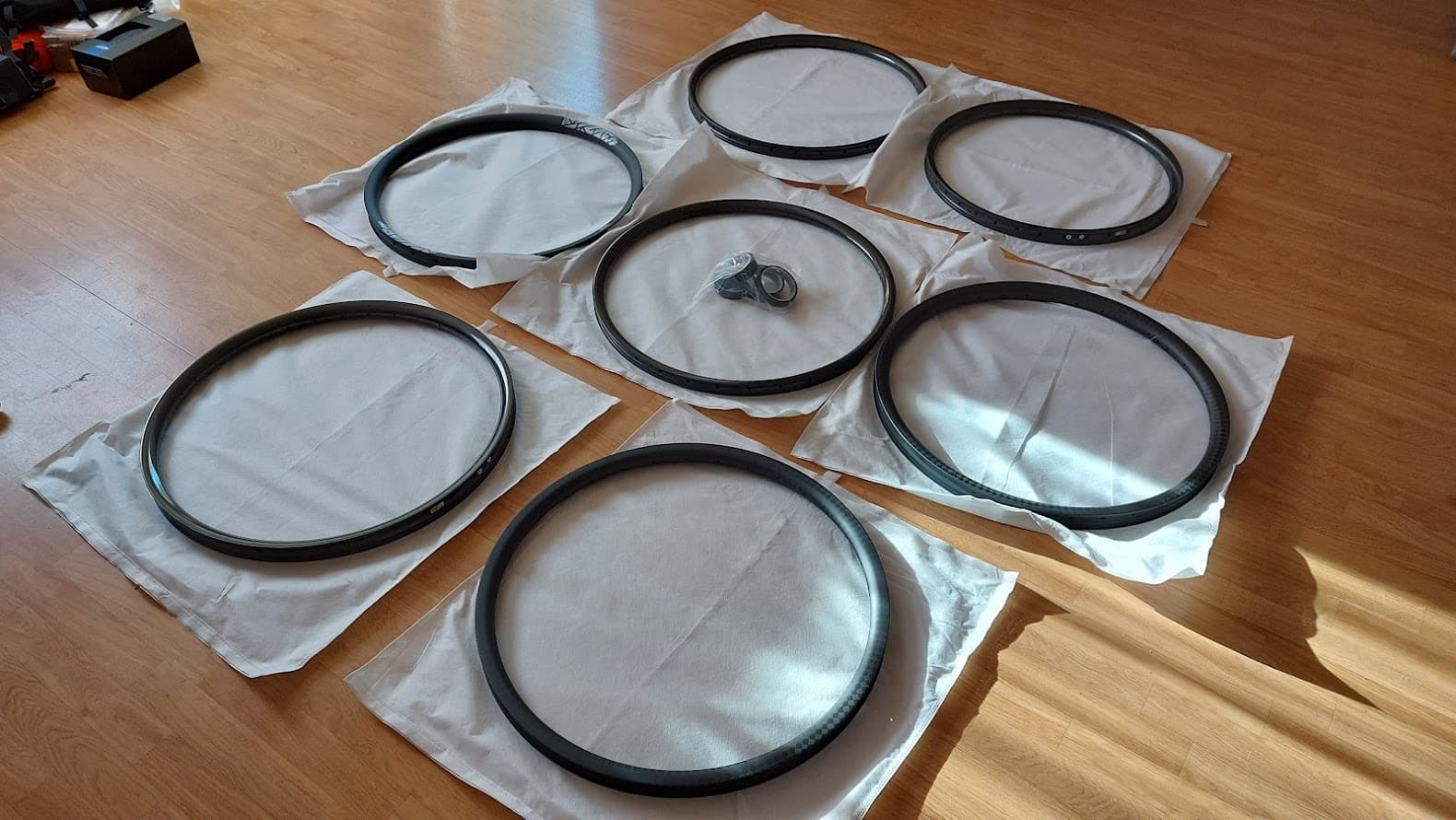
Today I received the 7 rims of our order at LB. Nobody took the “drain holes” option. I don’t remember my rims taking water… this option didn’t always exist.
Oh awesome. So hookless won’t reduce my tire choice options? I wasn’t exactly sure what you meant in that realm.
My LB rim has drain holes. But honestly I can’t remember ever having water inside a rim on a bike or unicycle and I live in a part of the world where it’s very wet many months each year. So not really needed…
I belive hookless rims are slightly stronger. Some “wire bead” tires will stretch to much and blow of a hookless rim but any “folding bead” tires designed for tubeless use should be fine (and that means any high quality tire…)
Makes a lot of sense. Thanks for the quick response. I’m getting closer.
I understand that there can be confusion about the topics of rims and tires. It’s mostly related to the use you make of them. A few years ago, when you bought a 29" unicycle, it was not specified if it was for road or off-road riding. The philosophy seemed to be: “if it’s good for off-road riding, then it’s good for road riding”. We don’t do jumps of several meters on the road. For off-road riding, listen to what Jakob says, you can do what you want and if you want to push your limits and optimize then get a rim that is a little wider than you would on a bike to have a good grip at low pressure (i35 mm with a 2.4 or 2.6 tire is perfect).
For road riding, you want to ride at high pressure. This is where hooks and a narrower rim can be of interest. You are not looking for grip, but less rolling resistance, safety at high pressure and handling. Here you have to pay attention to the rim/tire adequacy. The hooks (and the use of an inner tube) can be a plus to keep the pressure.
One of the things I’ve noticed with carbon is that the stiffness it provides means I ride at lower pressures than with an aluminum rim.
On my G29, I rarely go over 1.8 bars. At this pressure, no one has blowout problems. Go with tubeless hookless rim.
Will do. Great info, thank you.
What a delicious photo 
I was advised to order with drain holes by my wheel builder but I kind of regret it. I have likely no cause to worry about the hole making the rim weaker really … but I have since suspected it is for bicycle usage where the speeds are greater and water soak up just more likely.
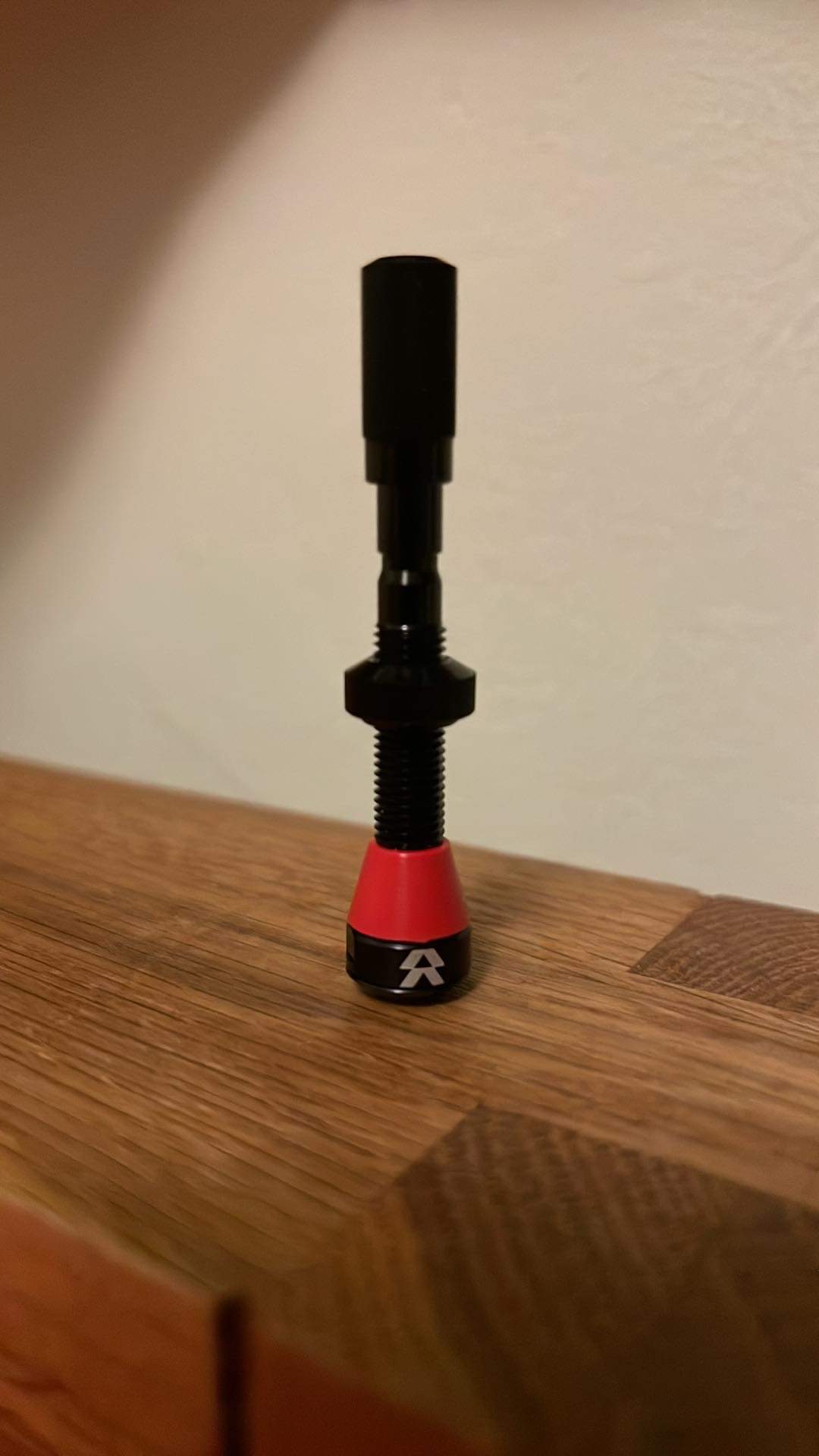
Linked to this, Ryan you might find this tempting.
I need to caveat I haven’t tested them so it is solely from reading the reviews and the fact I’ve hated standard presta values on inner tubes in the past - so wanted something “nicer”.
Others may know if these are or aren’t worth it. But felt like mentioning it.
This is a good thread.
Something I don’t believe anybody has mentioned yet is the reason why fat rims (>35mm) with skinny tires (<2.5in) don’t work so well. A fat rim makes the tire profile more square. This causes the side nobs to engage earlier as a tire is tilted over into a turn. This early engagement of side nobs causes the tire to hook a bit; it grabs and pulls to the side the nobs are on. I find this really frustrating. I don’t want to fight autosteer, I want precision. For this reason I’ll probably be going skinnier in the future, 30-33mm inner width for tires 2.4" - 2.6" and occasionally up to the 3.25" of the crux. I want those side nobs pulled down the sidewall a bit where they won’t get involved before they are needed! Here’s a short vid explaining these things: https://youtu.be/VF_QTUiAqzI
It’s true that too narrow a rim for too wide a tire can result in squirminess as the sidewall collapses sooner at a given tire pressure but this can largely be remedied by adding a few psi to the tire. I’ve tried the 3.25" Duro Crux on the 50mm id KH rim and on the 33mm id Nimbus Dominator 2 rim. Each has its advantages but I prefer the narrower rim as the tire steers more consistently, precisely, and reliably.
P.S. I’ll add that tires themselves vary in how far down the sidewall the cornering side nobs are. The Maxxis DHF side nobs are pretty far down such that they project beyond the width of the inflated tire carcass while the Specialized Butcher is just the opposite such that the carcass of the tire is wider than the width from side nob to side nob across the inflated tire. For the former you can use a wider rim. For the latter you need a narrower rim to pull the nobs down and away from the ground. Finding the best match for tire and rim requires a bit of experimentation. Of course there are additional factors like how stout the sidewalls are which complicates things.
Quick question. From Light Bicycles, AM is asymmetric and EN is symmetric, right? Edit: Its not, Its All Mountain and Enduro. I’m wondering how to make sure I get the asymmetric. Working on this.
Not sure if to get Pro or regular model here.
Am I on the right track? I’ve ordered a hub and am ordering the rim today. I’ll share details when its all together. I’m also going with www.spokesfromryan.com.
Thanks, as always!
Can you ask if anyone is interested in swapping a 36er 36h carbon rim with my 32h carbon brauss rim? I own a 36h exceed hub needing a 36h carbon rim! I’m can also add a quaxle 32h alu to match the Brauss rim + various lenght cranks
Alright another question. I’ll keep it simple - do you recommend I go steel hub or aluminum? I have a feeling aluminum is ishy for MUni.
I’d personally opt for a steel one. That’s the way KH and Nimbus have been moving. All one piece affairs and pretty much bombproof.
Aluminium hubs are more for a road / lightweight focus - and when I build my 36er with the 125mm hub option I am really glad I went with the steel hub over the normally spec’d aluminium one on the 36 Oracle.
I went with the Pro. It is tougher I believe. But I’ve seen others use the standard one.
I think this one comes down to budget really 
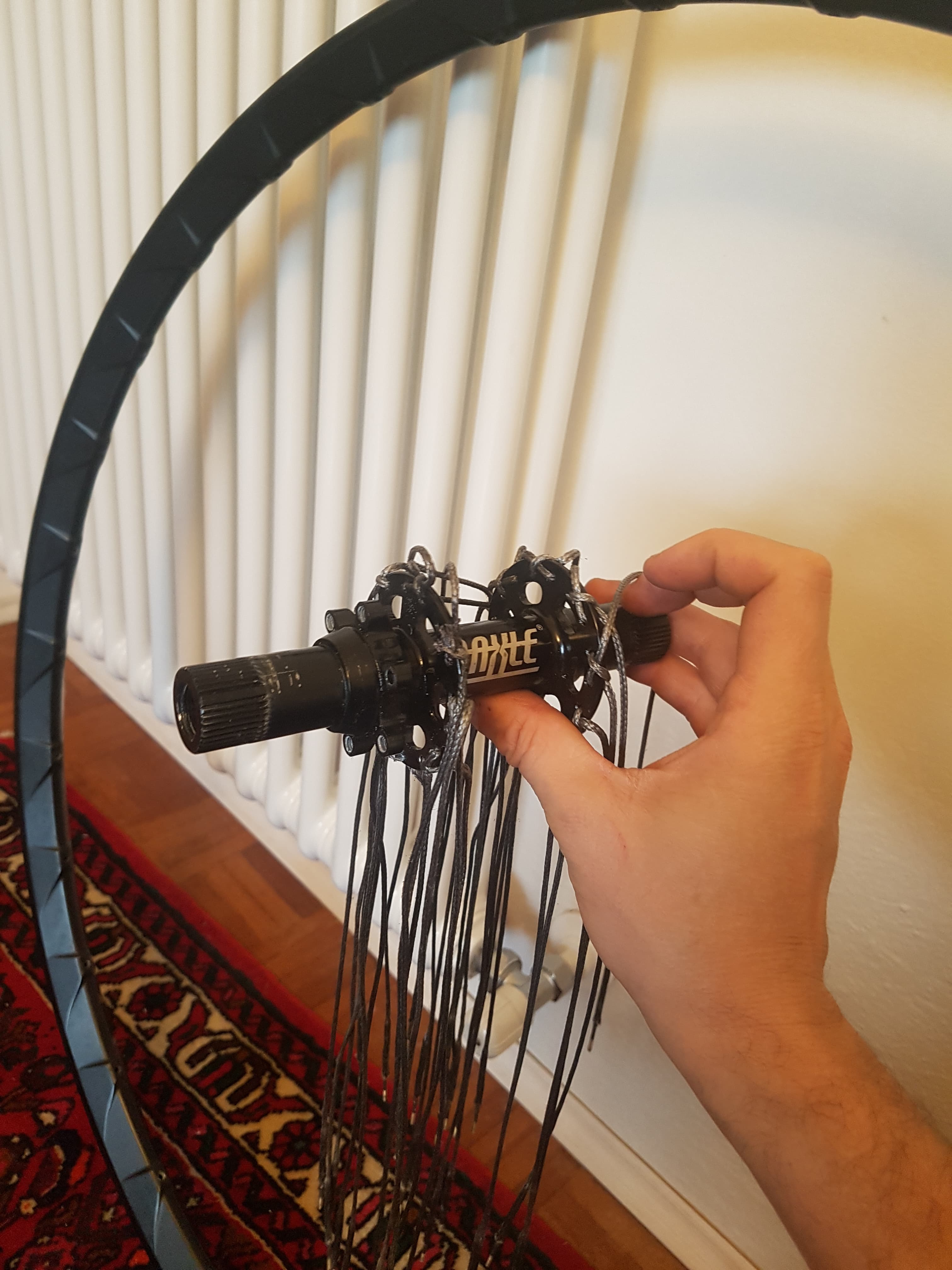
Your experiments are very inspiring. Whether it’s the handlesaddle customizations or the rope spokes. I can’t wait for this. Unfortunately, I only know one unicyclist who has a 36" 36 holes carbon rim (the 1st version of the Nextie). I haven’t heard from him in a while, I can ask him. Most of the 36" carbon rims in France are braus rims.
I am! I have a nextie 36h, and searching a brauss 32!