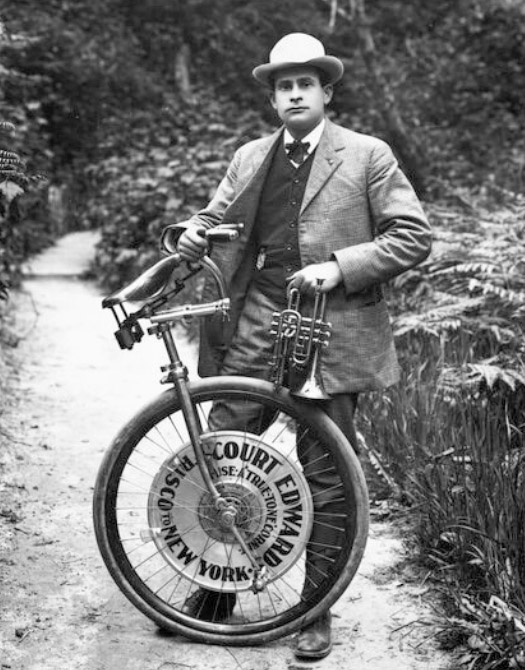
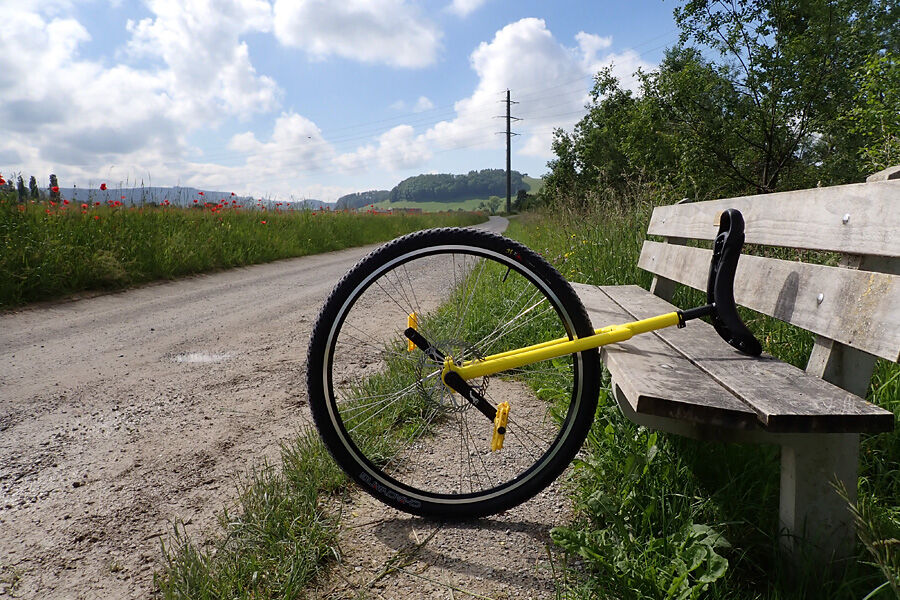
If old fashioned and purist go together, then the modern “purist” need to get those handle bars on.
1849
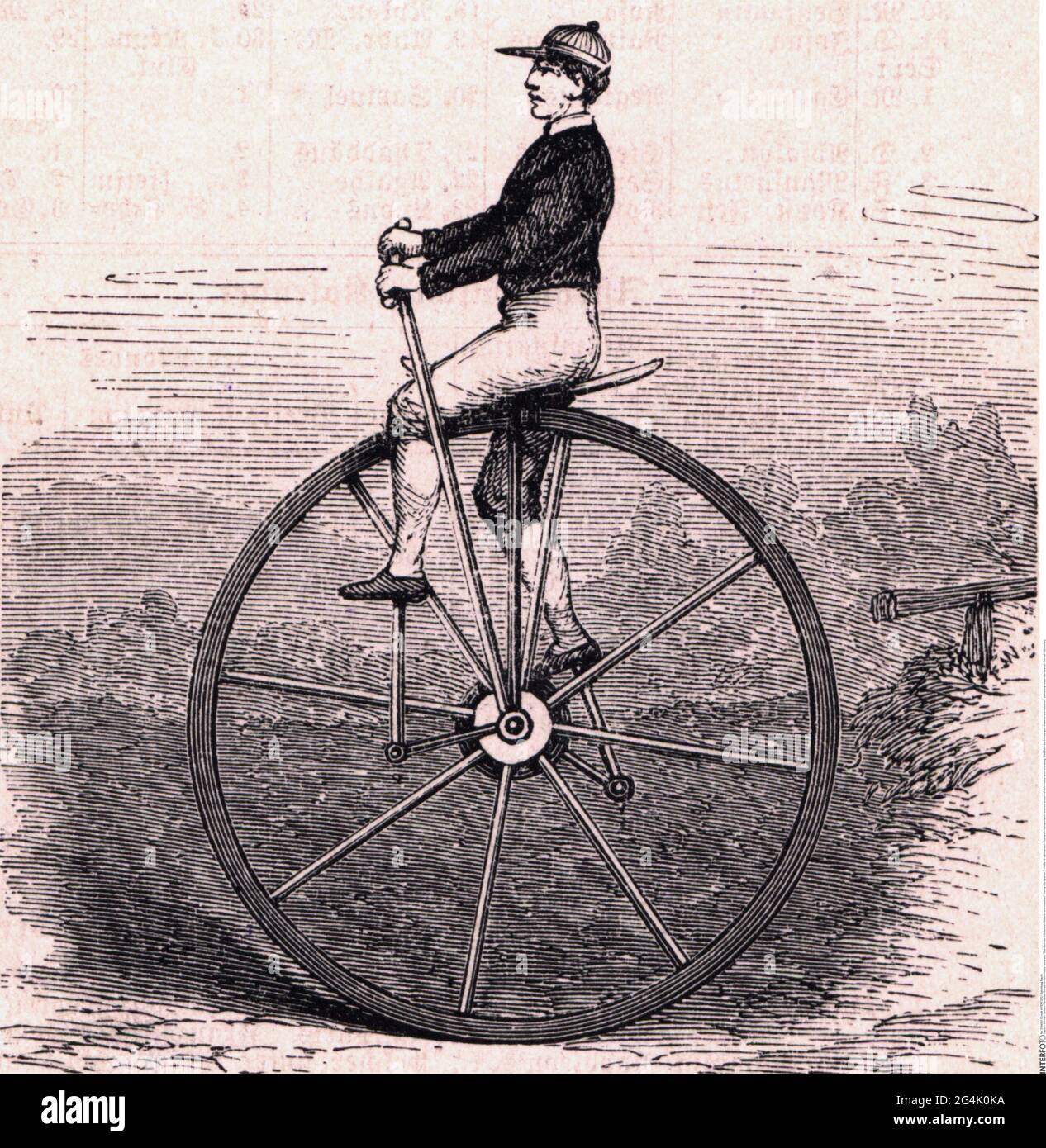
1892
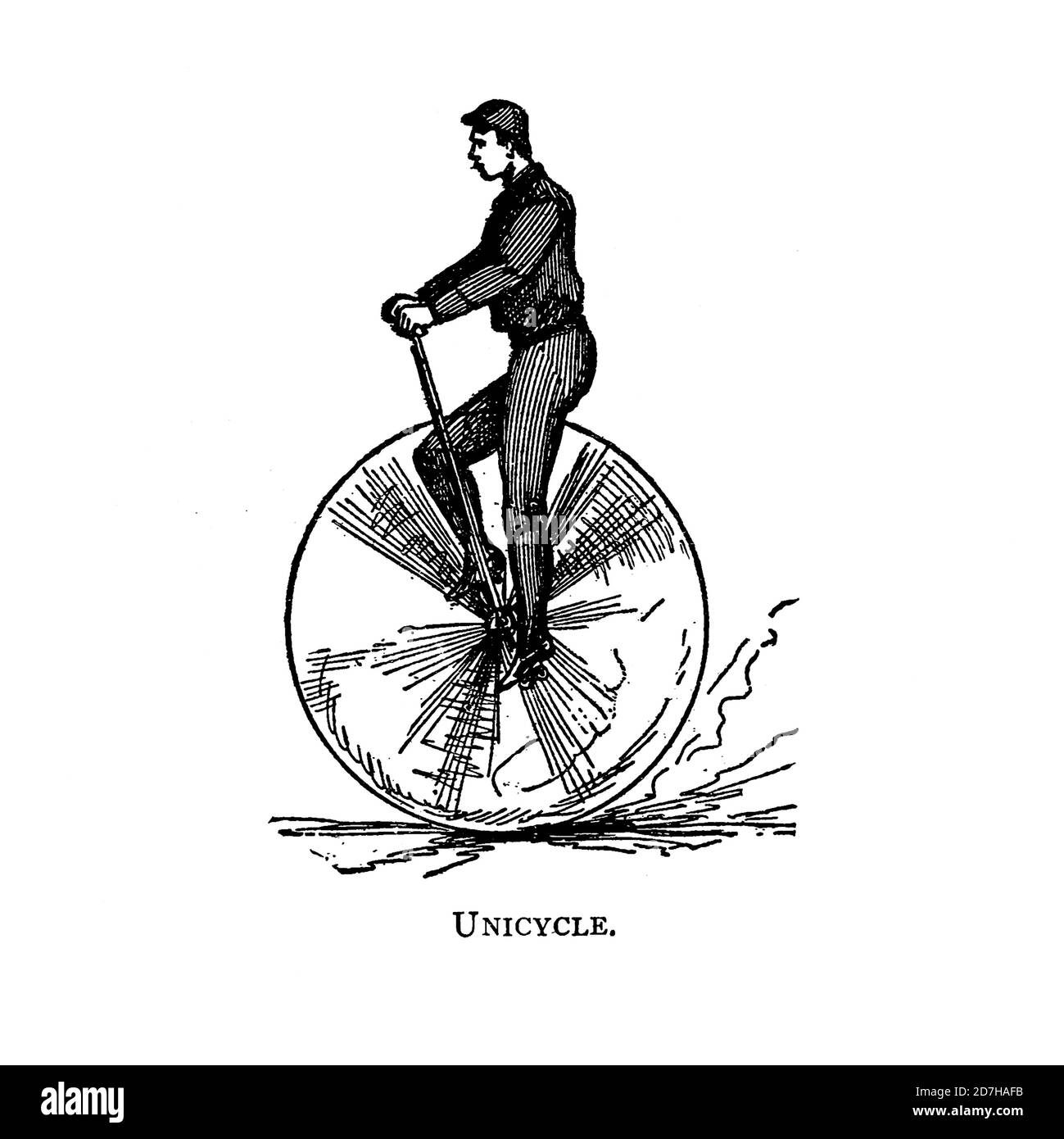
1909
If old fashioned and purist go together, then the modern “purist” need to get those handle bars on.
1849
1892
1909
Ha, ha - I love those pictures from the 19th century!
I guess this topic has drifted from a potential rider poll determining the number of 36er purists into a fun forum playground inspired by the original topic.
Following that vein, perhaps it is time to ask AI (chat GPT) about 36er purists:
In the context of unicycling, a “36er purist” would likely be someone who adheres strictly to the traditional design and function of a 36-inch wheel unicycle without incorporating additional modifications or enhancements such as brakes, handlebars, or hub gears. They may prefer the simplicity and challenge of riding the unicycle in its standard form, relying solely on their own skill and balance to navigate various terrains and achieve desired speeds.
A “purist” in this context might prioritize the authentic experience of unicycling, valuing the purity of the sport without the aid of external attachments or technological advancements. They may view adding brakes, handlebars, or gears as detracting from the essence of unicycling, which is often characterized by its simplicity and reliance on core balance and technique.
However, it’s important to note that the definition of a “purist” in this context may vary among individual riders and communities within the unicycling subculture. Some riders may embrace modifications as a way to enhance their performance or comfort, while others may prefer to maintain a more traditional approach. Ultimately, the term “purist” reflects a personal philosophy or preference rather than a universally defined standard within the unicycling community.
Determining the exact percentage of 36er unicycle riders who would label themselves as “purists” would be challenging without specific data on the preferences and attitudes of this particular subgroup within the larger unicycling community. However, I can provide a speculative estimate based on common trends and observations within niche sports communities.
Given that the concept of “purism” often implies a dedication to traditional or unmodified practices, it’s reasonable to assume that a significant portion of 36er riders might embrace this mindset to some extent. Many enthusiasts of niche or specialized sports are drawn to the authenticity and challenge of mastering their craft without relying on external aids or enhancements.
That said, the percentage of riders who would explicitly identify as “purists” could vary widely depending on factors such as individual motivations, cultural influences within the unicycling community, and personal attitudes toward technology and innovation. It’s possible that some riders may adopt a more pragmatic approach, choosing to incorporate certain modifications or upgrades to improve their riding experience without necessarily rejecting the notion of purism altogether.
In the absence of concrete data, I would cautiously estimate that a significant minority, perhaps around 30-40% of 36er riders, might consider themselves “purists” to some degree, with the remainder falling into other categories such as those who embrace modifications or those who are indifferent to the concept of purism. However, this estimate should be taken as speculative and could vary considerably based on specific demographics and cultural factors within the unicycling community.
I wonder what data chat GPT was trained on to come to its conclusions. Could it happen to be How many 36er „Purists“ on this forum? 
Purists/Minimalists/Pure Form:
There’s something to be said for keeping things simple. Uncomplicated, less stuff to break, less complications. Probably most of us started out on “pure” unicycles that didn’t have any/many add-ons. My own original unicycle was so “pure” as to not have a pneumatic tire, ball bearings or even sensible bearing holders. It was so pure it was a piece of junk (Troxel, a maker of tricycles and juvenile bikes). That’s way too pure for me.
All of my early unicycles were pretty pure, as it was the early 1980s. The best you could get at that time was a plastic front bumper/handle on a Miyata (with only one bolt holding it on). That was the pinnacle at the time.
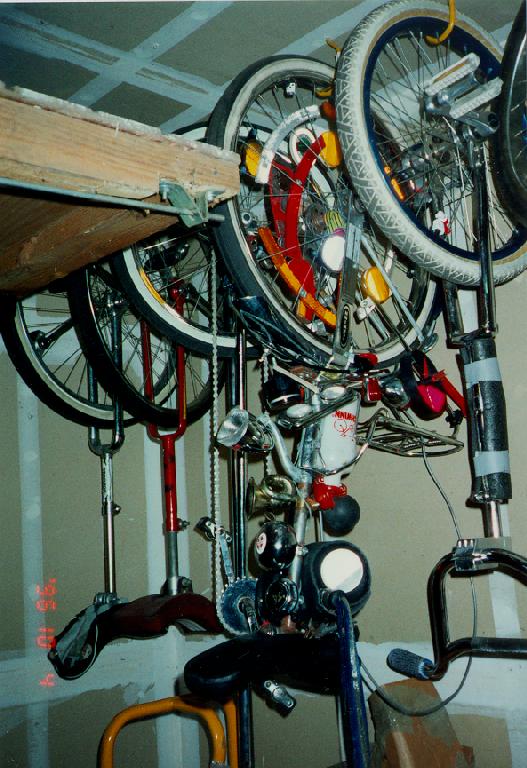
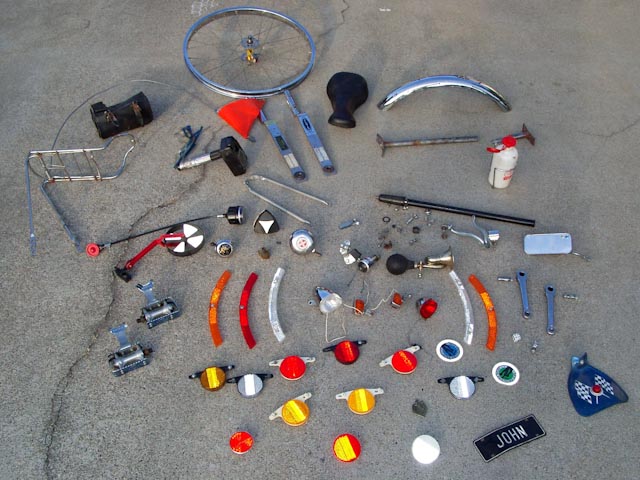
In 1981, I built a specialty unicycle to show off at the National Unicycle Meet, which my local club was hosting (Ann Arbor, MI). The Excessory Cycle was a 24" Schwinn coated with as many bike accessories as I could fit on it, while still being able to ride it.
So that’s about as un-pure as you can get.
My old Coker has a Wyganowski Handle and rim brakes, also not purist. But that setup worked well for Ride The Lobster, a 5-day stage race. My current 36", which dates from 2010, is a KH frame with Schlumpf hub, hydraulic disc brake and a custom power-coating job. A handlebar is almost required for “safe” riding in high gear; it helps a lot to have a more solid point of contact than just the front of the seat. When powering up hills in high gear (either short or non-steep), my technique is one hand on the seat handle and the other on the front of the KH handle.
For many years I rode Muni with no brakes. In part, it was because my 2003 Wilder frame was not built to accommodate a brake, but it was super strong and light, and I really liked it. So it wasn’t until 2016 that I picked up a 26" KH from Roger at a Unicon, with hydraulic disc brake. That accessory is essential for my knees on hills. In 2008 or so, I really jacked up my knees by not using my brake enough while attempting to ride around Lake Tahoe. My one knee got so toasted I ended up riding all the uphills, but having to walk the downhills. I didn’t make it all the way around the lake until the following year.
But most of my other unicycles are “plain”. Can we get a good idea of how many people ride 36-ers without brakes, gears or handlebars? Probably not super-accurate, as the people who post here are not representative of the larger unicycling community. We’re nerds. My guess would be at least 2/3 of 36er owners ride them the way they came; which if was without those add-ons, they aren’t on there now. The bigger question is whether they’re still riding them I guess…
Of course we have the ability to argue semantics until the sun goes down, and learn a little more about each other in the process. To each his (or her) own.
Nobody mentioned electric unicycles (please don’t throw things). They probably have their own idea of what’s “pure” in that category. Yes I have one. No I don’t ride it much. It tops out at around 12 mph (boring), meaning I could get somewhere faster on a 24".
Great for you Andy/Hardcore, riding up and down a very steep-sounding street on a 36" without brakes! That makes me wince. The obvious question for a uni-nerd to ask about that is “what size cranks?” I’ll vote for 150s…
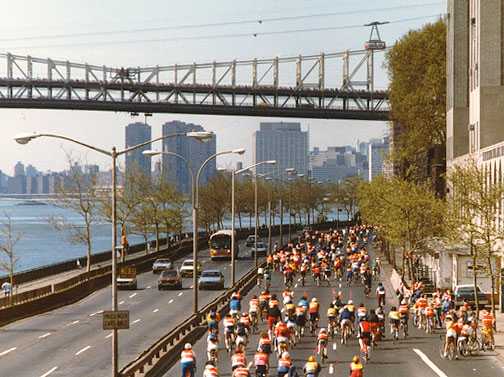
5 Boro Bike Tour: I’m so glad I had the opportunity to ride that while I lived in the area. First time was 1985 and I think I did it about 8 times, always with at least one other unicyclist. In those days it was a 36-mile route. With 20,000+ other cyclists; a sight to behold!
So I have one 36er and I rode for a year without handlebars or breaks but I just recently put handlebars on this year so I can have my phone in front of me instead of in a backpack. I had a cop come up to me (while riding!!) and told me “wow reckless driving! Texting and biking!” He was obviously joking but he did tell me to be careful while doing that cause he didn’t want to hear any dispatch calls for a uni
You can ask different unicyclists what constitutes a purist, and you will get multiple answers.
My personal definition is simply between those riding geared vs ungeared. Unicycles are elegant, simple vehicles. They allow you to be directly connected to the wheel unless you add a gear system. The biggest change in the ‘feel’ and complexity of a unicycle is between ungeared and ungeared.
Handlebars are hard to define (eg my medium/long Mad4One handle saddle is not a separate attachment, but is long enough to spread out like a bolt on handlebar. Likewise brakes- it doesnt change the ‘feel’ of a unicycle all that much, but I’ve never felt the need to use one on a ungeared 36.
I was not aware of the “purist” concept in unicycling… but I have been close to that idea myself, and now I am seriously considering to remove the brake on my Nimbus Nighfox as I am not using it so much. I think it looks so much cooler with no brakes and no bars, and I love the feeling of minimalism and ability to manage downhills with no extra help. just a huge wheel … 
Funnily I find my 29er in its current form the coolest looking, as far as brakes go: With a rotor, but no brake  . Not very helpful, I admit. But I like the looks. And I will eventually get the brake installed, it’s just a matter of time. Hopefully.
I have a night fox 36er and I use to ride without brakes or handle bars but I recently put handle bars on just so I could have my phone in front of me- literally the only reason why  (long story short- I posted this on another thread but a cop once drove by me and said texting and biking! He was joking but he said be careful I don’t want any dispatch calls bout a uni) so that is why, but I do not have a break. I do like the look with the handle bars but I also hate it. Now this is my personal opinion but here’s why:
Hate: because unicycles are known for not having handle bars or brakes. When people see that I have handle bars they think oh it must be easier- it’s not we all know it’s the same difficulty with or without handle bars.
Love: I am a cross country unicyclist and I feel like I the handle bars gives off the vibe of long distance rider but that’s literally all
Not sure if, as a unicyclist, you really wanna care what people think  . But yeah, non-riders often don‘t realise which skills are easier to acquire and which are harder.
I am not a purist since I use a handlebar extension, but I’ve ridden many miles on a regular Coker (i.e., a “pure” one). I tend to ride pretty fast, so even with the original Coker, I would hold the front of the seat much of the time – it definitely adds a bit of stability. The handlebar is definitely an assistance (not for side-to-side balance but for front-to-back stability, I’d say). I’ve almost never used a brake and don’t have one on my current unicycles.
The handlebars at least for midsize unicycles that I have ridden assist in only minimizing the “twist” when applying fast pedaling.
I am not familiar with extra fore/aft balancing, unless you are “leaning forwards for comfort”. Is that it?
…slam
I find that a handlebar increases front-to-back stability. I believe this is because a handlebar reduces or completely eliminates the flexing at the waist in the forward and backward direction. It is similar to raising the center of weight, just as a giraffe uni is easier to maintain forward/backward balance.
Something similar happened to me. A while back I was going with some friends to do a long route (friends in bicycle). While very slowly riding in a sidewalk I got my phone from a pocket for some seconds to open strava and start tracking and after I have already put my phone back in my pocket a police officer in a car stopped me and threatened me in a bad-tempered tone that riding that weird machine while using a phone was illegal and that the next time he would fine me. Funny thing, since that time I have a joke with my friends that if I have my phone in the hand while unicycling I will summon the police, and so far it seems to happen always.
More related to the topic of that post, in Spain it will become illegal to ride a vehicle without brakes by 2025 or something like that, so being a “purist” unicyclist will be illegal. Electric unicycles will be illegal too as they onlly brake with the motor.
With respect to the handle bar thing, I think that the main difference is between riding holding your hands onto something or with hands in the air (or in your pockets or resting in your legs, or pushing your legs to help you go up in a hill😁), it doesn’t matter for me that much whether you hold to the front bumper of your seat or to a long bar as it just affects a little bit to the confort. So from my point of view I wouldn’t consider “purist” unicyclist someone who rides mostly holding one or two hands to the seat.
With respect to the difficulty of riding with the hand grabbed onto something, I would say that for a begginer it is harder, so it would be worth to praise, specially with both hands, since you need to do all the balance with just the body, kinda similar to how you learn to juggle while idling, first by trying to iddle using the arms to balance as less as possible. Then for riding at high speeds or in rough terrain I would still consider it harder to keep the balance, but as an overall I would consider it easier as it helps way more to keep the unicycle where you want it than it restraints you balance, so I would praise more someone who rides through a rocky section or at high speed in a 36 with the hands in the air.
Similar things have happened to me several times, but more than asking wheter I am able or not to ride hands free, it is more like “wow, look, he’s riding a unicycle”, “yeah, but he’s leaning onto the saddle”, and then they seem less impressed as if leaning on the saddle was something similar to use trainig wheels on a bike, probably thinking that it helps you in the same way that it helps in a bike.
As a general though I just think that most people have a basic concept of “a unicycle is a bike with one wheel that is almost impossible to ride”, and they doens’t stop to think over what is really a unicycle, how it works, what things can you do with it or how difficult is it to ride it (there are a lot of people who can do wheelies on their bike, as a non biker opnion I think that it is as hard to do a wheelie consistently than ride a unicycle, and even harder doing a manual than riding a standard unicycle, so people could try to get an idea of the difficulty of unicycling from this).
I also feel that most people just have the conception that the only things that you can do with a unicycle are learning to ride it, ride it and juggle or do another activity while riding. Then when you’re learning to ride a weird unicycle or trying to learn a new trick they just think that you’re a begginer unicyclist and they get bewildered when they see you ride your unicycle normally, as in their minds you just went from beginner to pro in 2 seconds instead of pro that is trying to learn a hard trick to pro that is just riding the unicycle.
It’s so frustrating learning a trick in public!
I’m not a 36er purist as I have both bars and a brake, but I will say that the installation of a brake on my first 36er came out of necessity.
When you encounter a properly steep hill on a 36er, even with long cranks, there is simply not the leg power available to keep the unicycle from disappearing out from under you, and I say this as someone who at the time was pretty darn fit from cycling all of my life up to that point.
Now I do have a few unicycles without brakes and I have no problems with riding them, but my 36er now is built for practicality, with bars and a brake so that I can ride down hills, generally reduce the forces on my legs, and also stop very quickly if necessary.
A brake also permits you to ride faster when going downhill than you could without, as it allows you to remain in control and spin more smoothly.
There’s a lovely tweet that I can no longer find from 2012 when I was riding to London Hackspace on my 29", using my kindle as a source of map data.
Did you jump the red light as a pedestrian or as a car?
I have to admit that using my phone while unicycling is as confortable as doing it while walking, but in the same way that when I’m doing it while walking I try to go a little bit more slowly and not use it at traffic lights I do it while unicycling, and if I want to use it while in the road I just stop to be safer.
No idea on the red light, it was many years ago.