UniQuest - Tutorial Series For Beginners

For what it’s worth: I started unicycling almost 3 years ago and I still consider myself a beginner. I can only ride short distances up to about 150 meters, then I have to step off and catch my breath. In the past I have tried to freemount, but without any success. Fortunately, I have a walking route near me, where there are many lampposts along the road that I use as a way to mount my unicycle. I find riding a unicycle very difficult. Freemounting is even more difficult for me: I have never succeeded.

I have seen instructional videos about unicycling, especially on YouTube. Some tips have helped me a bit, but I just think I have a completely different learning curve. Many tips are unusable for me. I have to figure out for myself what works and what doesn’t. Because my learning experience is slightly different with each session, it takes a lot of effort and time. That is why I stopped learning to freemount, it is too hard, and I am still riding from lamppost to lamppost for the time being.

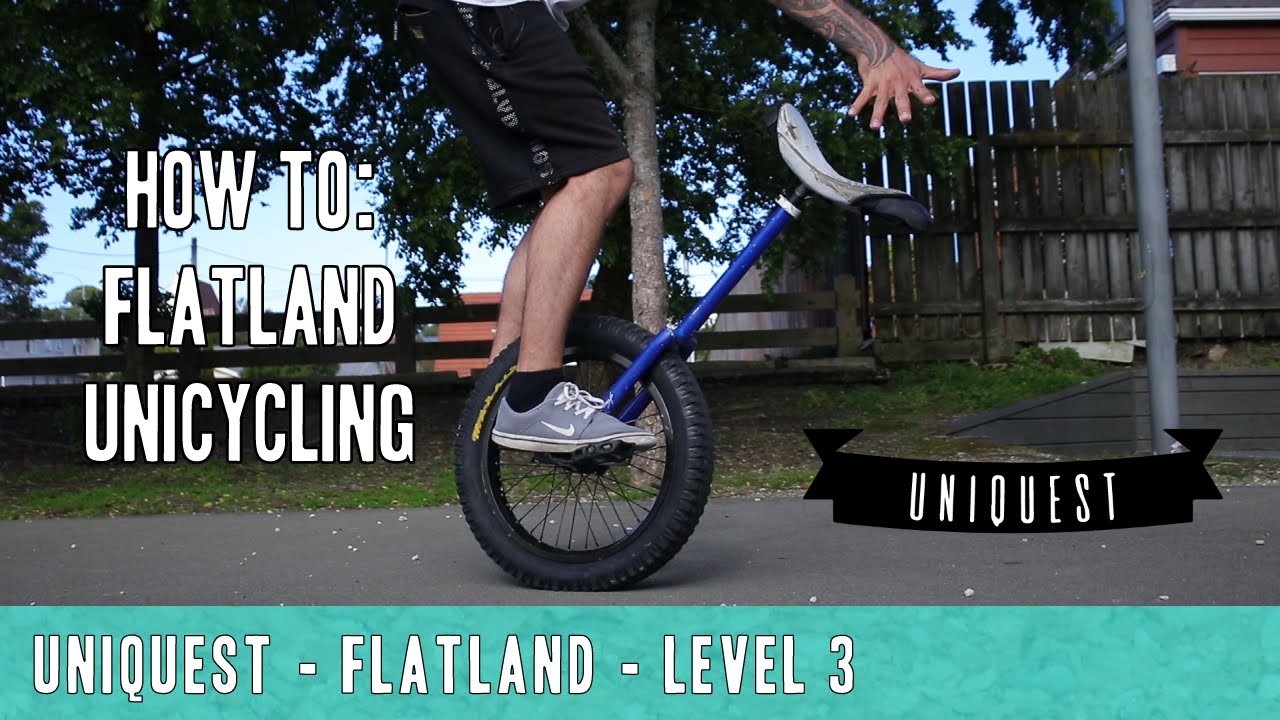
I have seen the first two YouTube videos of the UniQuest series. For me these are mainly demonstration films. It shows how an experienced unicyclist performs beginner skills. I prefer videos where a beginner shows, whether or not on the basis of instruction, how to learn to unicycle.

2 Likes

Where on the globe do you reside? A teacher is so helpful for learning to ride, if they can watch you and tell you what you’re doing wrong. For instance, from your description, it sounds like you’re not sitting on the saddle at all, which is exhausting. Focus on just sitting on the saddle, while hanging on to the lamppost and then into the riding.
Having someone watching could have saved you, it seems, many hours and months of frustration. If there’s someone on this forum who lives around you, I don’t doubt they’d be up for getting together.
Good luck :slight_smile:

I started learning to ride a unicycle in the gym at a unicycle club. I’m still a member of that, so I’ve had help from other unicyclists. In the early days I practiced along a wall and didn’t have my own unicycle yet. I live in the Netherlands by the way. After I bought a unicycle myself I started practicing outside. At first I practiced along a fence, but at one point I got the feeling that I was not making any progress. In my search I came across a number of YouTube videos. As a result, I tried to ride away from a pole. After a few days I was able to ride my first meters without support. My quest also shows that learning to ride a unicycle is a trial-and-error process. I don’t think there is a systematic approach that works for anyone who wants to learn to unicycle. Some learn it faster than others and in my case it just takes an extremely long time.
To keep unicycling fun, I mainly focus on what I can do.
The point I wanted to make in response to this topic is that I see these videos mainly as a demonstration of beginner skills by an experienced rider. The usefulness of this is limited for me as a beginner, but maybe I don’t belong to the target audience of this series.

I absolutely agree, and while (as said above) I enjoyed the videos I never found them particularly useful to me as a very beginner, or later on as a slightly more advanced (as in, more advanced than I was then) rider. In fact, I disagreed with many points of learning in them, though that is another note.

Here is how I would make a beginning tutorial:

In the introduction, explain that learning involves being physically, mentally and emotionally ALL IN. Being physically all in is going to result in falls. Discuss safety equipment. Mentally all in means we are problem solvers, we know unicycling is hard, we understand it’s going to take practice time. Emotionally all in means dealing with our fear of falling, our vulnerability, what others might think of us.

Then we’d move on to finding an assisted mounting location. In my neighborhood, there is a curb backing up to a wrought iron fence. That worked well for me, as I could spread my arms out on the fence prior to letting go. Lean forward, and you’ll have no choice but to pedal forward. Progressing quickly into an assisted launch into the open does two things: 1. It gives riders a taste of real riding (even if it’s a single pedal stroke), and 2. it teaches them how crazy and out of control things need to be, how much they will have to flail their arms. If, by contrast, a rider spends too much time at the wall at the beginning, they may start believing it is important to be in control, and that will inhibit their reflexes.

Next, I would introduce mounting. I’d suggest they lower their seat enough to perform a 6/12 mount while sitting on the seat. I’d demonstrate stepping over the second pedal. Then I’d mount on the first, then the second pedal, then remove the foot from the second pedal, without trying to move the pedals. Practice the mounts on both sides. Suggest, if there are stability issues, that one hand remain on the grab handle during the mount. The purpose of these free mounting exercises are not to learn a proper mount, but to help develop balance, and even more importantly, train the rider the correct position and order to remove the feet during a UPD. During the mounting exercises, the top foot is removed first, then the bottom foot. The scariest thing about being a beginner, for me, was the sketchiness of bailing out of the pedals during a dismount.

Then I’d explain that, incrementally, three things would happen to their mount, over time. 1. They would raise the seat up higher, 2. The 6:00 pedal would move in the direction of 9:00, and 3. They’d start placing more weight in the seat while mounting. BTW, #3 has always been difficult for me, and I currently apply weight in the seat during the mount with two hands on the seat / bar ends.

End by telling the riders they can use their assisted mounting location until it is too much of a hassle to walk back to it after a ride. In the meantime, however, they should still be practicing mounts, so when the time comes, they will be ready. Maybe I’d demonstrate the tire grab mount and mounting against my sternum. The tire grab, IMHO, is a great step towards a proper static mount, and the abdominal / sternum (don’t know the name) mount gets a lot of weight in seat (I practiced it yesterday and was able to mount into some sustained one-footed still stands).

Some of the comments, above, about Chris’ videos not being useful…I think that’s not so much an indictment of Chris’ work, but rather a reflection on the reality that we are our own best teacher.

1 Like

@mark.vogels I can’t help but disagree regarding learning to freemount before learning to ride, but that’s cool! Your response is no doubt influenced by your experience, as is mine :slight_smile:

In my experience, the best thing to do, if you’re wanting to get a feel for things and gain an understanding of how the unicycle reacts and how you react with the unicycle, is to mount the unicycle while holding onto something, and then, as I say in the tutorials, to move around and lean in all different directions then to slowly creep along the wall while holding on, to get an understanding of how the unicycle will respond to your weight distribution. If you learn to freemount first, then you will essentially learn to ride simultaneously, as you in fact can’t freemount without actually being able to ride :sweat_smile: :sweat_smile:

But that’s cool! We can disagree :stuck_out_tongue:

I have to add, I have taught countless amounts of people to ride and I’m sure if I recounted my experiences, I’d have atleast another 20minutes or so that I could put into a video around further detailed tips/explanations for learning to ride. And I will no doubt make more, further detailed versions in the future.

It is interesting for me to hear that some people didn’t find the videos helpful haha, but it is good to hear that many people atleast gained SOMETHING from the videos. I completely agree that we are all our own best teachers and that many of us will have unique learning curves.

All these comments are making me think I need to make a video ‘Beginner tips that I’ve missed’, good idea?

1 Like

You could try and do that, but as you found out, many people here have learned in different ways. What works for one, may not work for another. Though I agree with you that you should invest time in learning to ride before learning to mount, I don’t agree pedalling as fast as you can when learning to ride backwards. Like with all tutorial videos on youtube, I just take from them what works for me. Another example is mounting a 36". For some peeps it works best to do a rolling mount, but a static mount works best for me. And not to speak of crank lengths where everybody has their own ideas.

Yesterday I took my freestyle uni to see if maybe backwards riding would be easier than on the trials uni I had been using, but I noticed the cranks on the freestyle were shorter, which made it more difficult for me.

As it is I will unfortunately have to take a break from riding backwards, because my knee has been playing up. I haven’t been able yet to relax enough and just sit on the seat and put too much pressure on the knee.

As for your videos, just keep on making them in your style. I think you are doing fine and I like watching them, even though I don’t intend to learn all tricks.

Ok, I have to be honest here, the first 2 days I had the uni I had several sessions of 15 minutes or so in my hallway (both sides have a closed wall) getting to feel what the uni does and ride back and forth a few times (at the end even unassisted).
The 3rd day I went out to the parking lot and got my first 2-3 tries of riding as assisted mounted, but after riding (wobbling) 20m or even 50m there was no way I would assisted mount again, so I either had to walk back, or start with the freemount.
From that point on I made it a task to only freemount and then start to ride, which gave me exactly what I described earlier, the confidence to push harder on the uni for cornering, riding off a curb etc, all because I had so many upd’s during the freemount sessions :wink:

So in way I absolutely agree with you about getting the basic feel first, but I felt (and still feel) that freemounting is more helpful to master before actually mastering cornering.

Well, I’ve been practicing some more of course, and had some “aha” moments which I can’t remember having read or seen anywhere, but which made things click.
I would suggest to gather the most noticeable “aha” moments from people when they started riding and put them into a single source.
The ones that I can come up with:

  • Pushing down on the handle or pulling on the handle to control the angle of the uni.
    Riding longer distances I’ve noticed that it was hard to keep a consistent drive forward, especially with bumps on the road. But now that I know about using the handle to drive the uni forward, it makes things so much easier.
  • trying to keep the rotations of the pedaling as smooth / fluent as possible. You don’t need a lot of power to drive the thing forwards at once, but slowly building up speed gives much better control

That depends on what audience you hope to reach with this series of videos. I actually dropped out after the first video, although I did see the second. I think you have roughly 3 types of viewers:

  1. Viewers who do not ride a unicycle and watch your videos for entertainment, and do not intend to start unicycling themselves. I think there will be quite a few.
  2. Viewers who can already unicycle and see if they can use some tips that you give.
  3. Viewers who cannot yet unicycle and want to learn.

I think a video with beginner tips that you missed will add something especially for the last group, but only those who have roughly the same learning curve.

I may fall into a fourth group. I don’t spend a lot of time watching unicycling videos. But, what captures my attention the most about tutorials is how many different approaches there are to learning. These are, for me, the most interesting discussions on the forum.

Maybe this is just semantic, but I like the word principles rather than tips. A tip is something you might give a rider at a specific time, maybe while you’re standing there watching them. A principle is more broad, it applies in more situations and it can be appreciated by riders of different skill-levels and by non-riders. Principles are like circles in a Venn diagrams. An effective tip happens in the intersection of those circles.

One principle, or generalization, might be that saddle height slowly rises up during the learning process. It starts low, so the rider can step off sideways. It starts low for a 6:00 mount. It starts low because getting caught on the seat is the worst outcome.

Another principle is how the age of the rider affects their learning. Kids may spend less time at the wall, middle-aged folk more time. Falling is more of an option for young people.

Chris did a nice demonstration of standing, leaning forward, then taking a step. That is a principle that new riders can use to give themselves tips. An extension of that principle is that it’s better to fall off / dismount off the front as a beginner.

Another principle is the two kinds of balance on the unicycle. 1. Balancing yourself on top of the uni, and 2. Controlling the uni so it’s under your center of gravity. Beginners flail their arms like mad because they haven’t yet learned the second form of balance. I think this principle would be interesting even to non-riders. Some of the discussions I’ve had with lay people about unicycling suggests to me that they think balancing on top is the more prevalent form of balance, and as a result, they consider unicycling more dangerous than it really is.

1 Like

Personally, I found that this never worked for me (and this was my main issue, though saying I “didn’t find them particularly useful” may have been a bit harsh :slightly_smiling_face:) because actually riding a unicycle means you only have weight leaning forward (theoretically), which is something you can’t reproduce when holding onto a wall that is next to you. I can’t claim a superior method because I didn’t fully learn using your ideas, but I found it far more helpful to ride away from an object into the open.
If it’s not just for riding, it is for feeling what the uni does if you lose your balance. And riding isn’t always straight forward I guess. It depends on your style of course, but I already end up riding down roots, steps, drops, off camber, riding up and down slopes, twisting, sharp turns, hopping, riding backwards, etc.. In that case knowing how the uni will respond under your weight is very reassuring that you can handle the situation :wink:

I agree, forcing the uni with your legs, pedals, hips and hands is actually a lot easier than just balancing on top (which you could test by taking your feet of the pedals and still stay in balance.)

Well, you kind of learn that automatically when you ride - which is the whole point, right, to get the muscle memory of how the unicycle reacts?
Anyways, fair point, on a sideways slope you’re not just leaning forward, but doesn’t it make sense to start with the flat (or head-on slope) riding before learning that? Regardless, you don’t ever really ride like you’re leaning on a wall… I hope. Because if you do, you might find that there actually is a wall right next to you - the ground.

1 Like

leaning might be a bit much, but tapping it for support can be great.
I was playing around with flips the other day and having a wall or tree for support helps a lot :wink:

1 Like

I’m new here, thanks for the cool tutorial

3 Likes

Ahhhh, I wonder, did you watch the tutorials?
I did try to emphasis that leaning forward is the most important- with emphasis around riding without a wall being preferred if riders can fight the fear, with a large importance on the need to keep your hand in front of you- constantly, so your connection to the wall isn’t impeding your forward lean.

Was this unclear?

1 Like

Yes :slight_smile:
You made it perfectly clear, I had no issue with the instruction. I do, however, doubt that anyone would actually do it without leaning sideways. It’s easy if you can ride and next to impossible if you can’t yet.
While the instructions themselves weren’t bad, I would personally stick with exercises that force someone to do the right thing, rather than simply telling them to do it.

@UniQuest I’m very new to unicycling and I created an account to let you know I found your videos this morning and really appreciated them. My feedback:

  • I thought your “showing off” was inspirational, and fun to watch. I like to know that what I’m looking at is how it should look when done right, rather than as just learned from a beginner.
  • You do go through the different skills very quickly. While you mention a few tips, I would appreciate spending more time on queues or learning aids and describing how things should feel. Some of the best info I heard on your videos were along the lines of “if you’re falling like this* then the reason is probably ”
  • I like how you break down several skills into one video. As I’m learning it helps me to have a few different things to work on each session. If I’m focusing on one thing only I can get frustrated; sometimes it’s best to try something different to get out of the funk. Having this short list of skills to rotate through keeps things fresh.

Thanks for the great content!

1 Like

Congratulations on starting to learn, and welcome to the forum! Feel free to introduce yourself here: Introduce Yourself

@AndrewA
I see what you’re saying! Many times I’ve thought to myself “Hmmmm… Is this going to create a bad habit for some people?” And its very true… I just find myself wanting to add extra comments like ‘You coooooould try this’ and then I’m like ‘buuuuut you probably shouldn’t’ haha.

@AndrewS
That’s great feedback!
I think there are some clear themes coming out that I can delve muuuuuch deeper into each skill, but I’m glad you enjoy seeing multiple things to try in one video. However, as I’m sure it will help a lot of people, I need to go back and spend some more time on a few things- which I’m happy to do- really any reason to make ANOTHER video is a good thing :slight_smile:

This next video, is another step up in difficulty!

Like many people are wanting me to revisit the beginner videos to add to them, there are also many people wanting me to progress with harder skills- so I’m going to try maintain where the current series is going, but I want to make extra bits and pieces along the way.

I’m considering making SUPER indepth, like mega boring if you can already do the skills type videos, but designed to be the kind of thing you’d watch if you’re willing to spend 20minutes watching me go over the smallest details. Considering making this a Patreon perk.

1 Like