Googling around just now I read a big Q factor causes wobble when pedaling fast but makes steering easier. For a 29" uni, which I intend to use for medium distance and a bit of rough track riding—a bit of an all rounder—the narrow Q might be alright.
Definitely not the bearings. If you don’t experience this problem then the only thing I can think of is spoke tension.
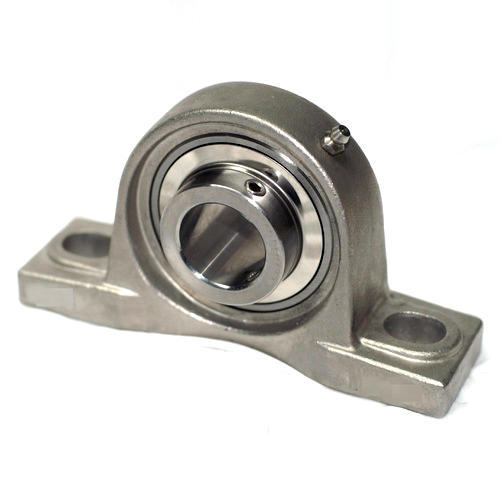
Re. over-tightening the bearing housing, it’s not recommended as it can cause uneven wear to the outer bearing race and it also causes drag as you noted. TBH, typical unicycle bearing housings with a detachable lower half are really not the best way to hold the bearing in place, because it squashes the bearing’s outer race. Ideally the bearing should be pressed axially into a fixed one-piece housing. The fit should be snug enough that there is no play. This gives the uniform load distribution around the perimeter of the outer race which is the optimal way to load a bearing. A detachable housing like this would achieve all of the above:
I think it all boils down to what works best for you and that’s largely determined through trial and error.
1 Like
Do you hear the rubbing all the time? Or is it only certain kinds of riding that makes it happen?
The only time I’ve noticed frame flex on any uni is when I am pedaling hard up a steep hill. Those aluminum alloy frames are pretty stiff. It takes some force to make them flex when you ride.
I have that too occasionally with my Nimbus 29". I just have to sit very still while pedalling and then it is quiet 
It happens twice per wheel revolution, once for each pedal, as long as I’m exerting any amount of force on either pedal, even moderate force. For example, riding on a flat smooth surface, whenever I push a little harder to accelerate a little or to make a sharp turn the rotor will rub the pads. I’m kinda glad nobody else seems to be experiencing this problem, but also somewhat perplexed I am.
I mentioned earlier that it might be related to spoke tension but, on second thoughts, it couldn’t possible since the spokes are in no way connected to the rotor. If it was related to crank flex, it would only happen when I push on the right pedal, but it happens with both sides, so it’s definitely frame flex.
The fact that the HS33 rim brake mount has been removed from all KH unicycles makes me think frame flex has always been a problem with KH frames, only more noticeable with a rim brake, because lateral deflection is much greater near the crown.
I think the KH frame design with its iconic square crown is actually inferior compared with the ubiquitous rounded crown design. When looked at from the front it looks like a rectangle. From the truss wiki:
Trusses are typically (but not necessarily composed of triangles because of the structural stability of that shape and design. A triangle is the simplest geometric figure that will not change shape when the lengths of the sides are fixed.
Unicycles frames with a square crown are inherently less stiff than those with a rounded crown, precisely because it is not a triangular structure. For small wheel sizes a square crown is probably not a problem (smaller structure = stiffer) and it’s very common in freestyle unis but, then again, these don’t have brakes, so there couldn’t be rotor rub. That’s—I think—why all 27.5" unis and higher use the rounded crown design, because all structures have an inherent amount of flex. There are some 24/26" frames with a square crown but they are made of steel.
KH frames have a small triangular piece of aluminium welded on the underside of each corner, as reinforcement that looks more like an afterthought. Rounded corner frames don’t need any such reinforcements because they are naturally stronger.
In short, I think KH has come up with some very clever and innovative designs but the frame ain’t one of them.
Frame flex has been noted with other brands as well since nothing will be perfectly rigid. The rim brake mounts were probably removed because they are going obsolete if they aren’t already. Nimbus removed them. Qu-ax removed them. Disk brakes don’t require rims with braking surfaces which would allow for more rim options. Rim brakes would be more sensitive to frame flex than disk brakes and also need the wheel to be kept true.
You could try checking to see if your rotor or any other component is bent or misaligned in any way that may make your system more susceptible to brake rub.
Something about the term “rounded crown” tells me they aren’t triangles either.
No. I don’t remember hearing complaints about frame flex in KH unicycles at the time. The rim brake mounts were removed because disc brakes had become standard. Kris was not trying to hide a design flaw with that change.
The unicycle I ride most often has a steel frame and HS33 brake. I don’t notice much brake rub even with the steel frame, which is less stiff than the aluminum alloy on your KH.
The decision to go with a round crown on bigger unis has more to do with how they are used. No one is doing standup wheel walking on their 27.5" muni, so there’s no reason to have a flat space on the crown. Also the round crown gets the corners out of the way so that muni riders don’t bang their knees.
I think there must be something else causing the rubbing. I don’t see how normal riding around on flat surface would be bending your frame that much.
I had to return the first KH unicycle due to QC issues, got a replacement that had an obvious asymmetry in the frame, returned that as well then got a third replacement that (that’s the one I currently own) that had a straight frame but still some finish issues (parts with nasty sharp burrs) and weld defects at the crown joints (excess weld material and asymmetry in the way the various metal parts were aligned one one side with respect to the other). Since overall the frame was symmetrical relative the wheel and everyone everywhere said KH was the best of the best, I just assumed this was within acceptable tolerances in the world of unicycles. I had already troubled my dealer enough and I didn’t want to take chances with a fourth replacement that would inevitably have other problems, possibly bigger ones, so I reluctantly decided to keep it.
I’m very confused because everytime I’ve brought this up on forums the feedback I get is that KH unis super high quality. My experience has been consistently the very opposite. They are not bad, but they are not worth the price.
It’s been 3 years since I bought my unicycle, I’ll see if Kris can do something about it. Unfortunately I don’t have the unicycle with me where I’m at the moment and it will still be a few months before I can get to it (covid reasons…).
PS: I pulled the trigger today on a Qu-Ax RGB 29". I hope to have better luck this time!
Structurally it is much closer to a triangle because the stays are welded closer together. Plus, a rounded corner is always stronger than a sharp one. Sharp corners are stress raisers. In KH unis the sharp corner coincides with a weld, which makes it even weaker. Rigid bicycle forks use the rounded crown design probably for a bunch of good reasons:
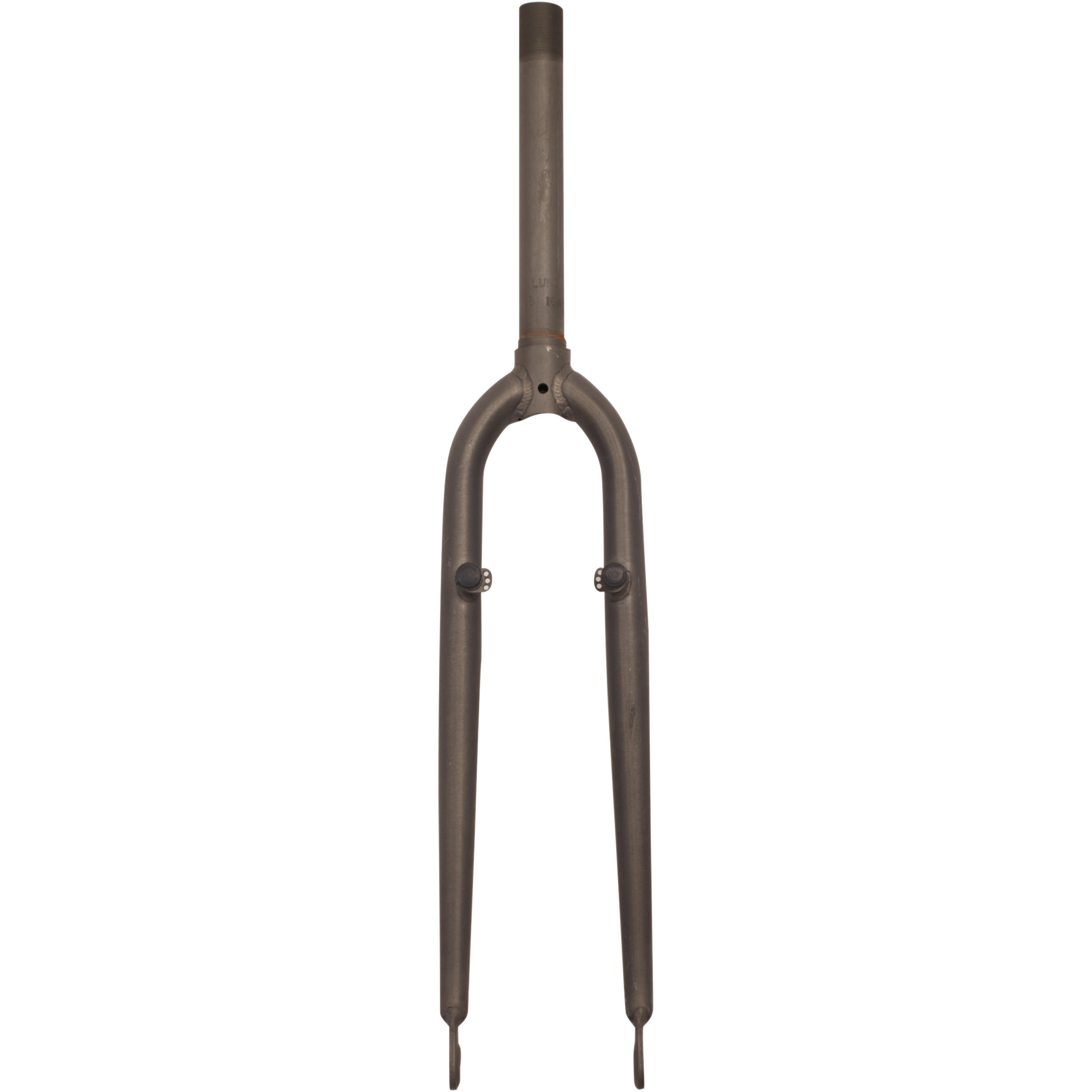
I am not sure why KH went with this design. I can’t think of any advantages vs the rounded crown. The manufacturing process of the T-shaped crown is actually more complex. Think about it, how do you make a hollow T-shaped tube out of a single piece of metal without wasting loads of metal? The way I see it gives no structural benefit and it’s purely aesthetic.
On freestyle and street unicycles a square crown facilitates doing tricks. I imagine it came from there.
The square top is for putting your feet on. The rounded corners are to make it a bit more knee friendly. See Frames | Kris Holm Unicycles
Are you concerned about strength or stiffness? I imagine that the frames are strong enough for most use, especially since KH went to the trouble of using a forged crown. I’ve never broken any kind of unicycle frame though (I know there are those who have), so that’s just speculation.
From a stiffness point of view, I would have thought that the majority of the flex would come from the legs, not the corners. Could be wrong though.
FWIW I have two Nimbus unicycles, an Impact (which incidentally has a similar square/round design to the KH), and a Mad4One. All of them have slightly asymmetric frames 
You are probably right, but I can’t think of any situation where resting one of my feet, let alone both, on the crown while riding a 36" unicycle would be more compelling than keeping both feet on the pedals, other than to show off my riding abilities which sadly I don’t envisage ever reaching that level 
1 Like
Maybe it’s considered acceptable, but I’ve had cheaper bikes (trials bikes) that cost me much less and had beautifully made frames. In my uni the rim was 7 mm closer to one leg than the other, even after flipping the wheel around (in case it was a dishing problem). I’d say 2 mm is the most I’d accept.
Oh, I’m not saying that it’s a great situation. I was a bit upset when I got my new Mad4One frame recently and it wasn’t perfectly straight. Just providing some anecdata.
I am 188cm tall and weigh 95kg. My own preference for a narrower Q is partly a result of riding with a higher saddle and a foot position closer to the toes. The higher saddle straightens the leg more, bringing the knee in and decreases the inward pointing of the heel (which can cause pedal strikes). The following is true for me (but you can try it yourself): Press against something with your foot. When I press using the heel of my foot, I feel stronger with the toe pointed out. When I press closer to the toe, I gain more strength from pointing my toe inward.
Not suggesting you should ride with a narrower Q, @Duff. But, it’s possible your preferences could change over time and depending on your posture and setup.
That could very well be, but I gave it a pretty good try, riding for about a month with a narrow q before I got the extensions and then again for most of a week after breaking them. Perhaps in a year or so, after my skill level has improved, I’ll start seeing the advantages of a narrow q, but for the moment it makes riding noticeably more difficult and less enjoyable.
It’s a shame that luck seems to be part of it.
I’m still meh about my RGB frame after always having zero issues with my KH stuff in the past so it’ll be interesting to hear what you think as someone who also seems to have high standards.
I’m not sure whether I’m happy or sad that the brand I expected to have perfect QC still isn’t consistently putting out perfection.
To be fair, it’s pretty minor. The frame is only off centre by 1mm (ie the gap between the rim and frame is 2mm larger on one side compared to the other). It was just, you know, a new uni, spent a lot of money on it, spent the time and effort to get the wheel perfectly true etc.
I decided to live with it because:
- There’s more variance in the tyre width/shape.
- I didn’t feel like sending the frame back to Italy.
- It’s a muni so it’s going to get banged around anyway.
- There are more important things in life.
If I’m feeling really keen one day I can always adjust the dish in the wheel to centre it in the frame.
My Nightrider frame is way more wonky - each set of legs is offset in different directions. I ended up splitting the difference with the wheel position and I doubt anybody has ever noticed it.
Here are some QC issues with KH stuff:
Seat post poorly finished, as you can see, the surface is uneven. My cheap made-in-China uni didn’t have this problem.
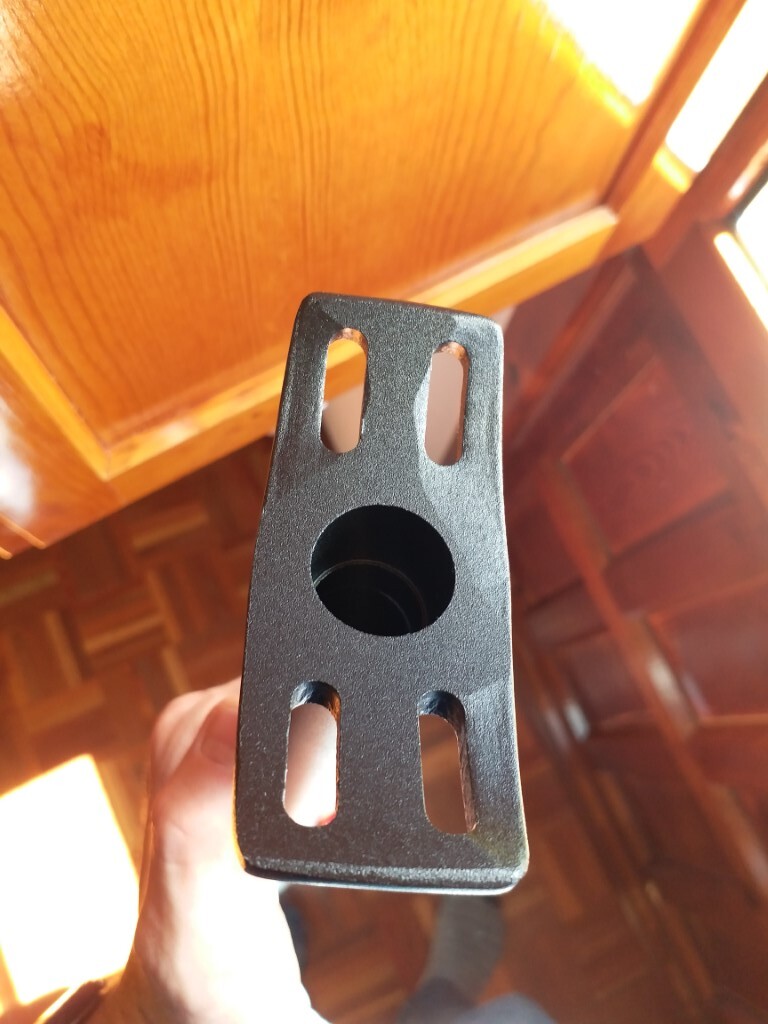
The saddle cover velcro strap. I honestly have no idea what purpose this strap is designed to serve. Is it supposed to sit between the saddle and the top of the seat post, or over the underside of the top of the seatpost? Either way you can see the left and right straps are not properly aligned and their location is just stupid as they cover the bolt holes. I decided to cut them off and the saddle cover has stayed perfectly put, so I assume they are useless.
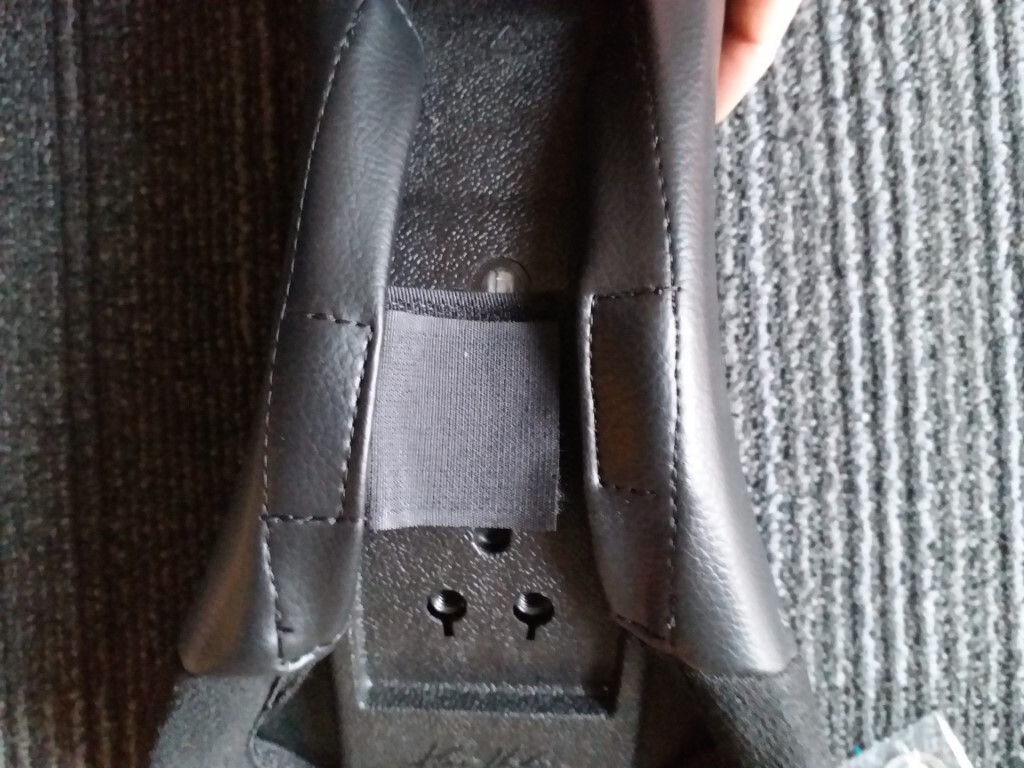
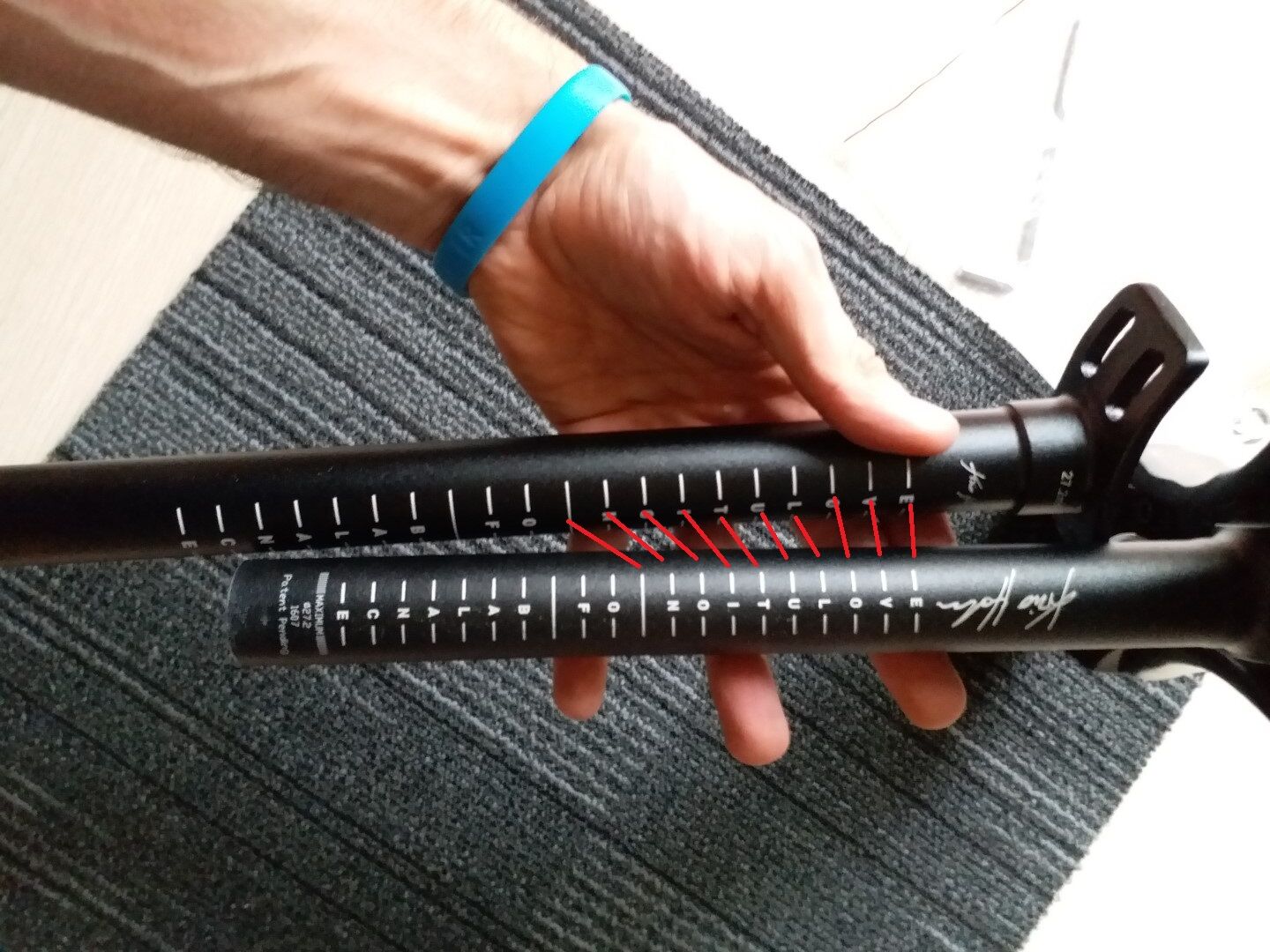
The seatpost grading is basically Stupid with a capital S. Firstly, KH should have use mm, not some ridiculous “e-v-o-l-u-t-i-o-n–o-f–b-a-l-a-n-c-e” nonesense. I like to adjust saddle height depending on crank length and this doesn’t make things easy. I had to record my seatpost settings as “evolution of ba.5”, which is impossible to visualise and remember. Second, if KH still insists in using its own ridiculous grading system, then for goodness sake use the same scale in all your seatposts!
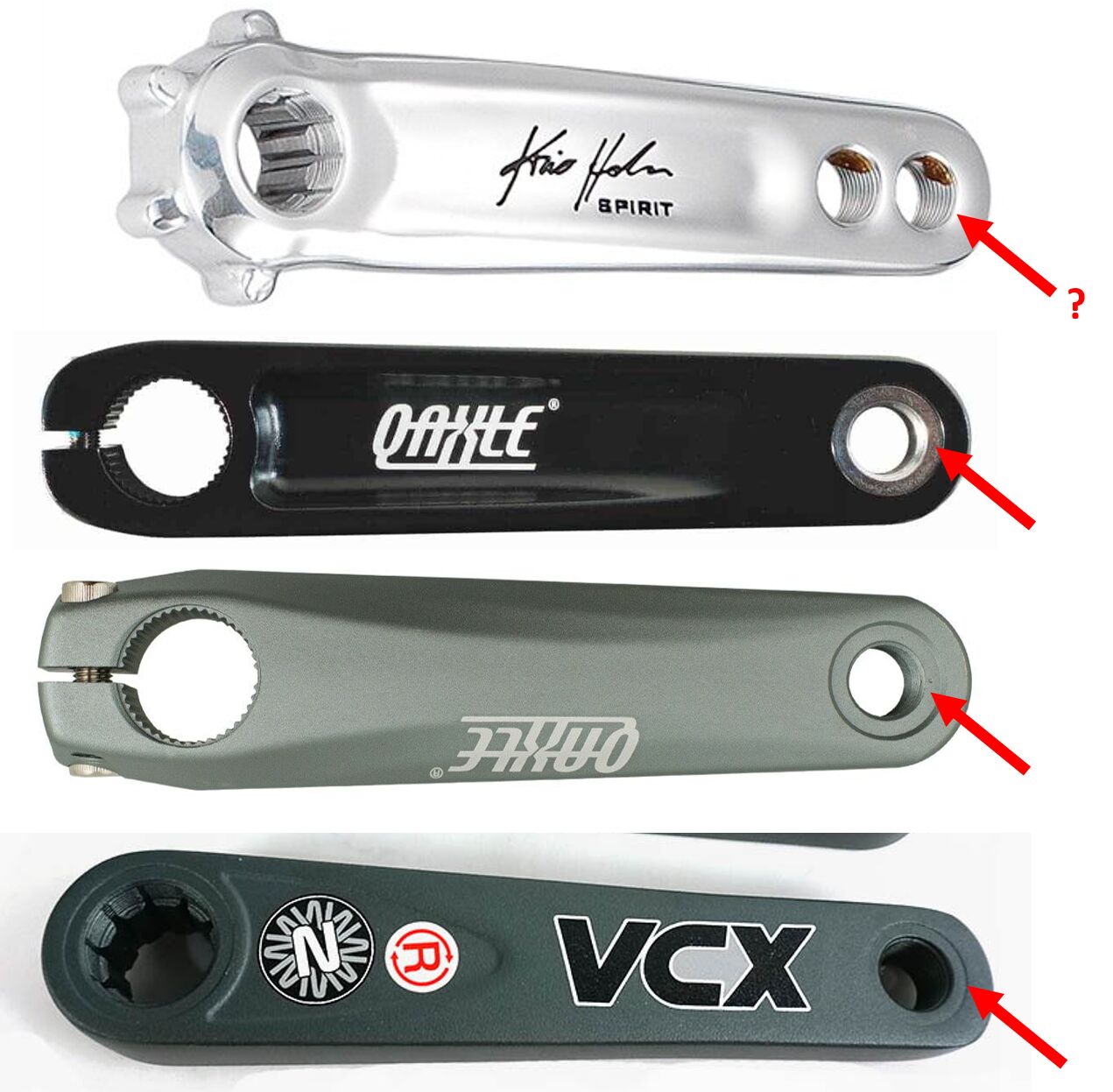
Unlike old KH cranks, the new cranks are not faced at all (saves manufacturing costs) so the pedal axle either carves into the crank metal as you tighten it (cheap stock KH pedals) or simply makes uneven contact with the crank:
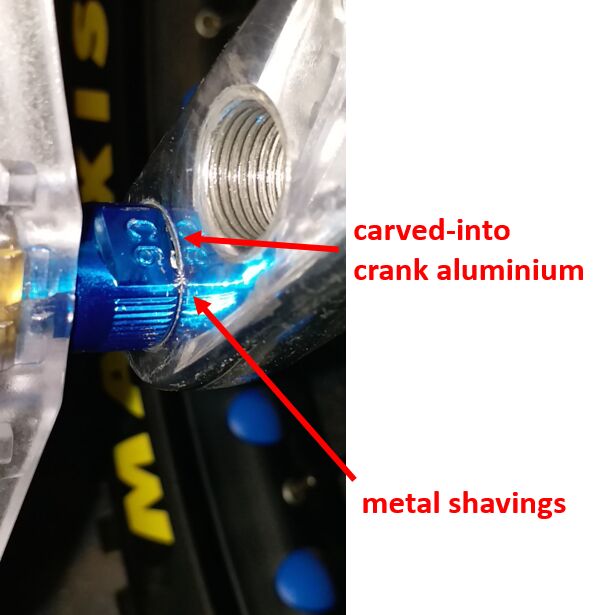
Pedals wise, the included pedals are cheapo ones that don’t even turn smoothly. The axles cut into the crank material, here’s why:
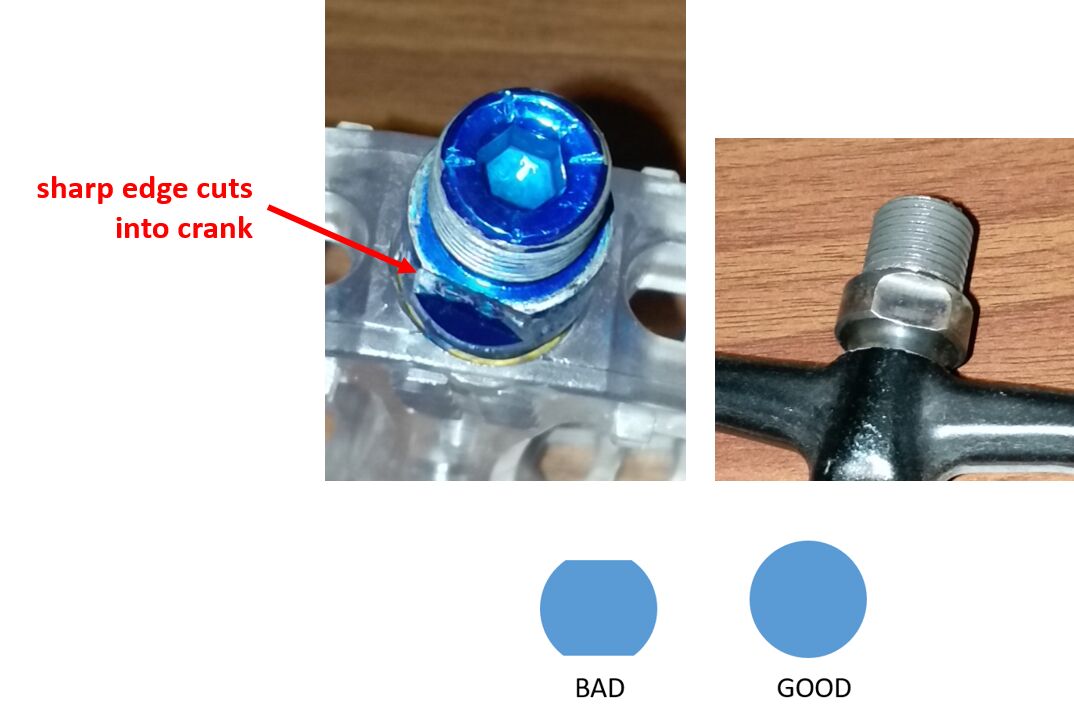
I don’t have any pictures of the welds at hand, but anyway… I’m underwhelmed by the lack of attention to basic detail.
1 Like